
Line structure9 processes
Shandong Hengyang New Materials Co., Ltd. · Geosynthetics plant
Geomembrane · Geotextile
Geomembrane · Geotextile
Composite liner · Containment
One plant, full range
Based in Lingcheng, Dezhou, Shandong, Hengyang manufactures HDPE geomembrane, geotextile, composite liner, GCL, drainage net, ecological bag and cement blanket, made and tested to current Chinese standards for landfill, tailings, reservoir, wastewater and canal projects.
15production lines
43patent results
29,410m² site area
12application types
Drafter of GB 45320-2025In-house geosynthetics laboratory15 production linesCE conformity
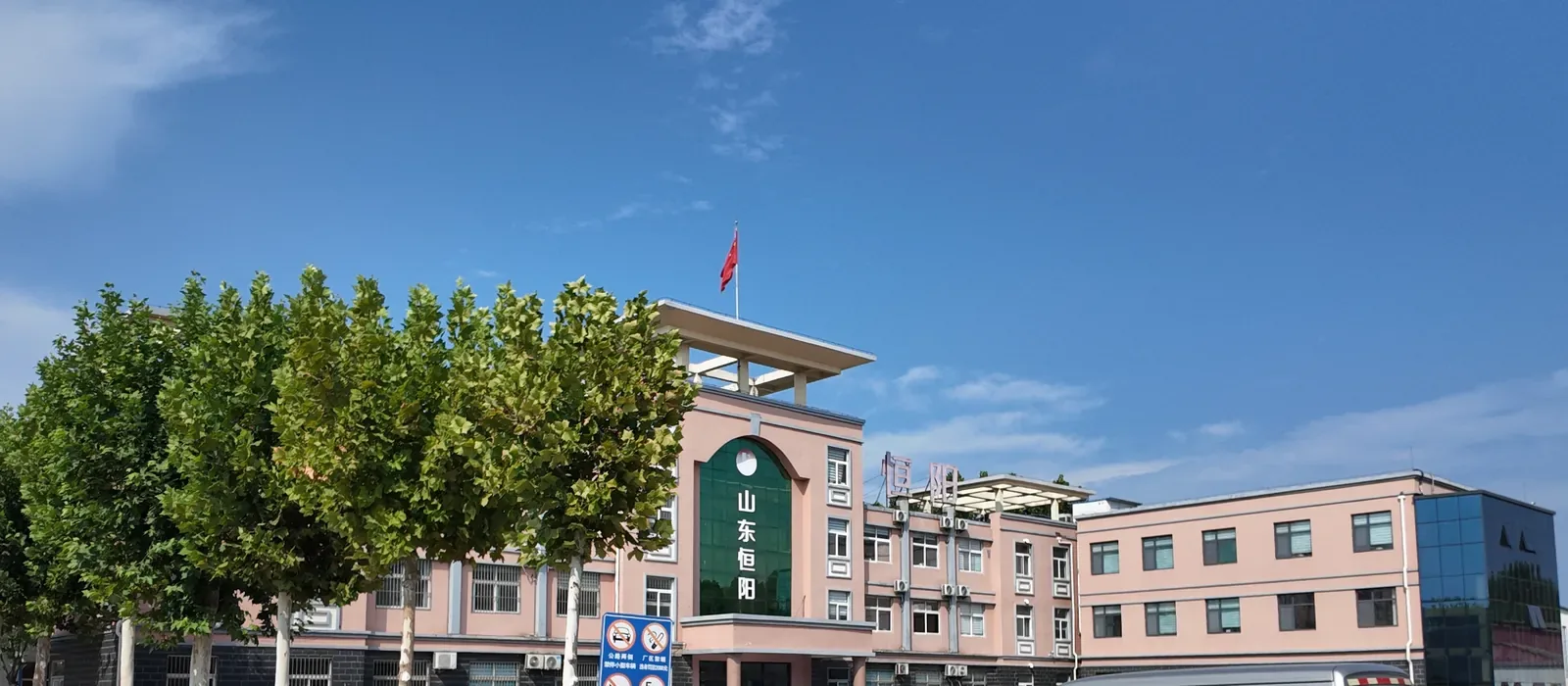
Factory mapEight zones in one viewFACTORY MAP · 8 ZONES
01Main gate02Plant panorama03Product display04QC room05Office building06Geomembrane line07Geotextile line08Automated geomembrane line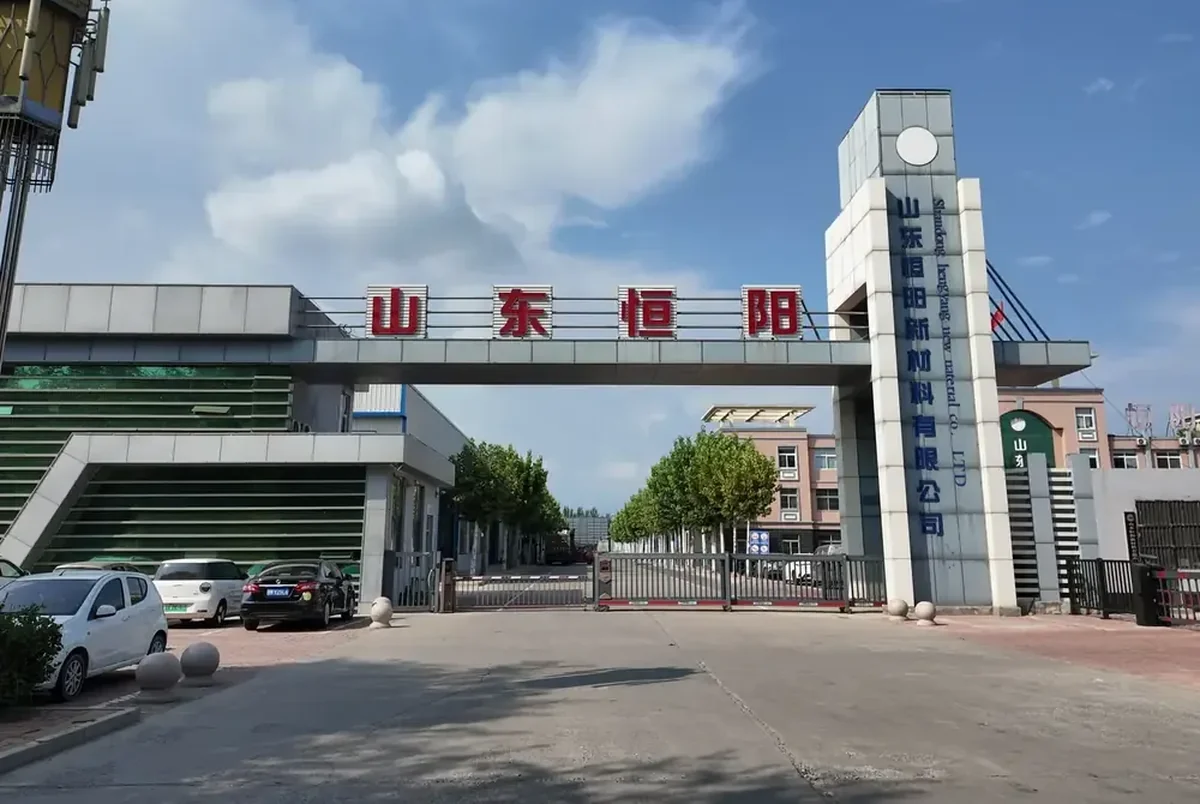
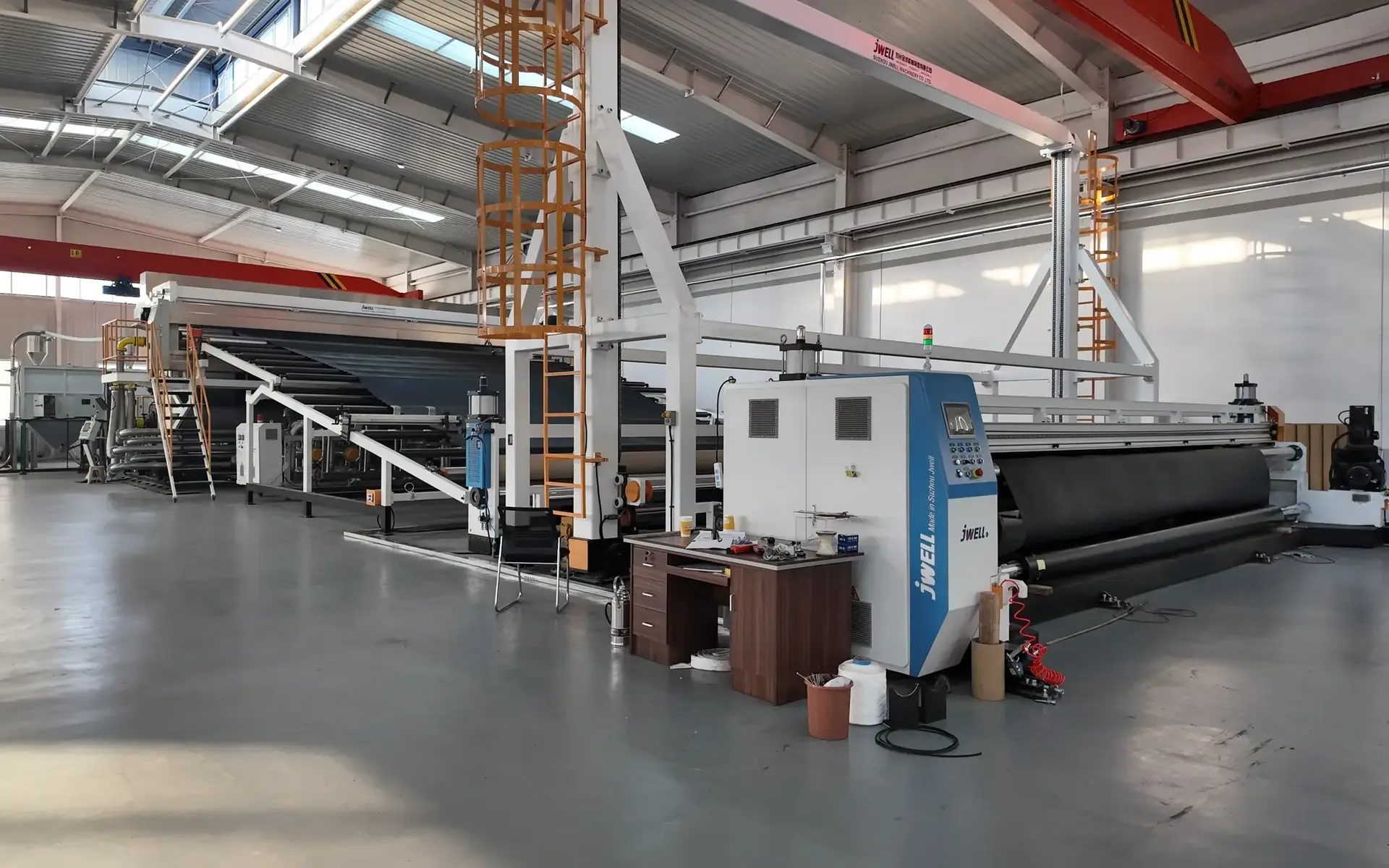
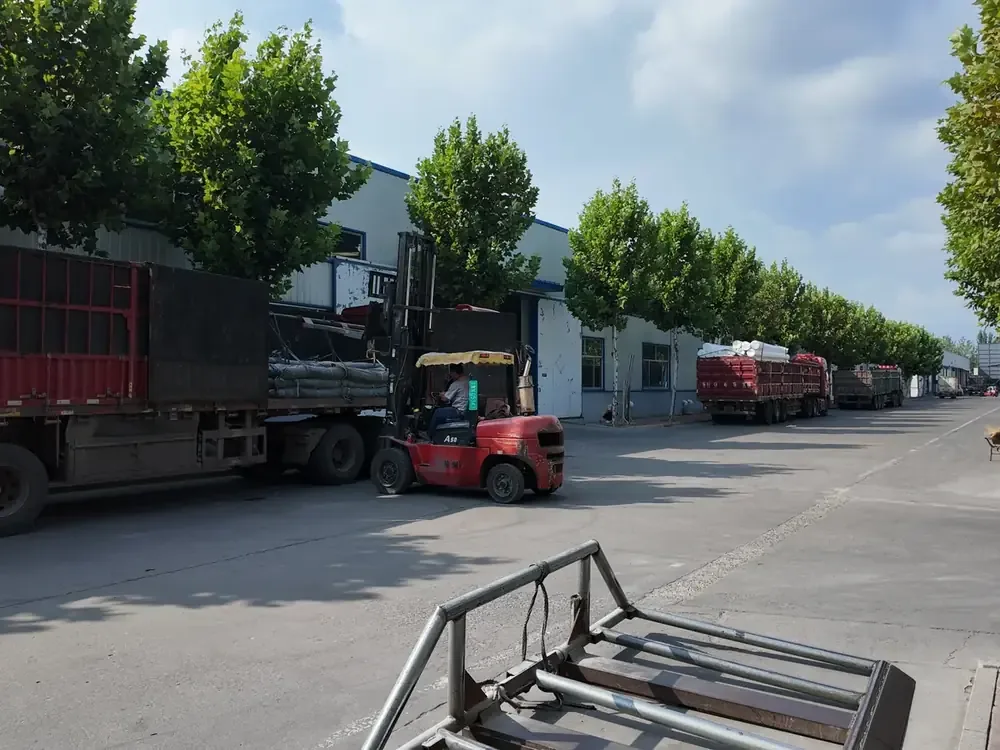
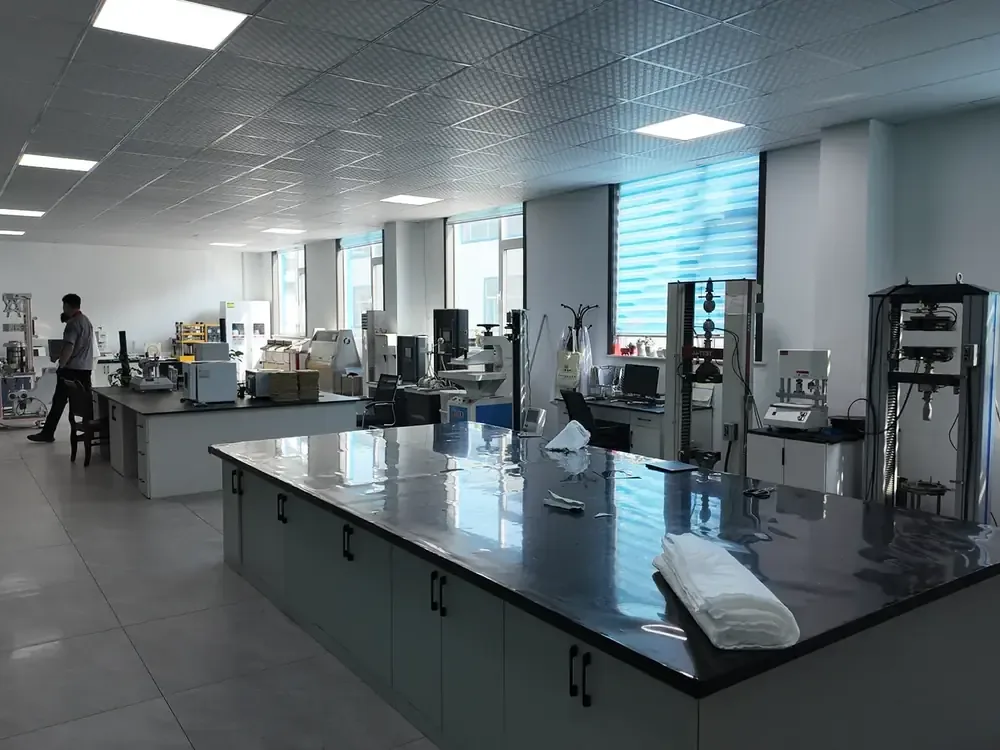
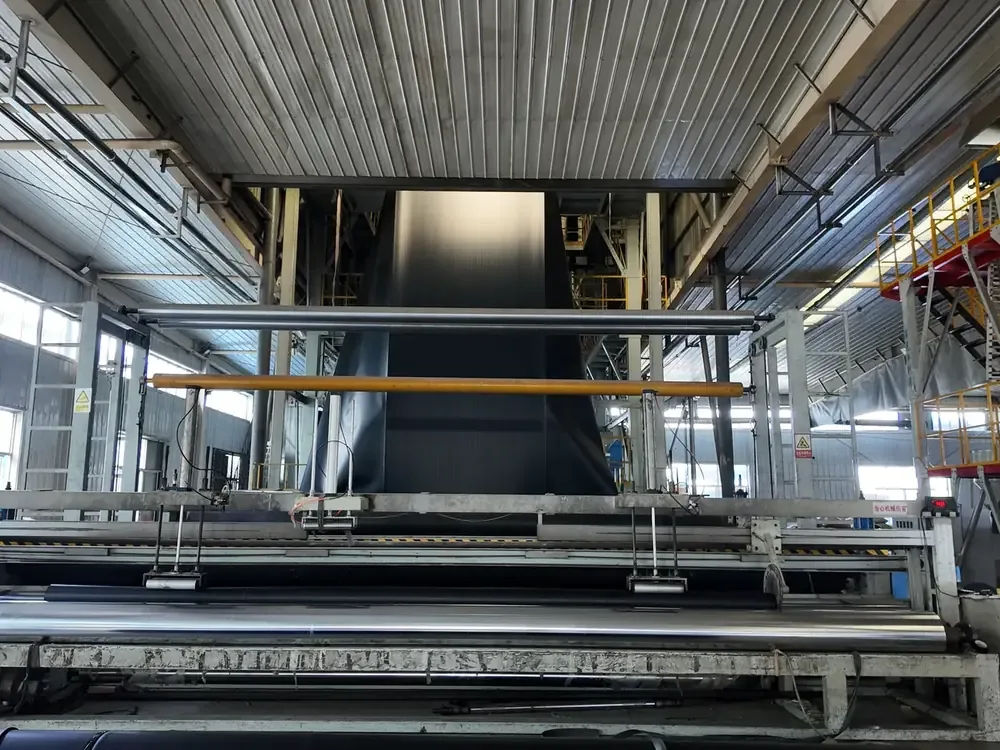
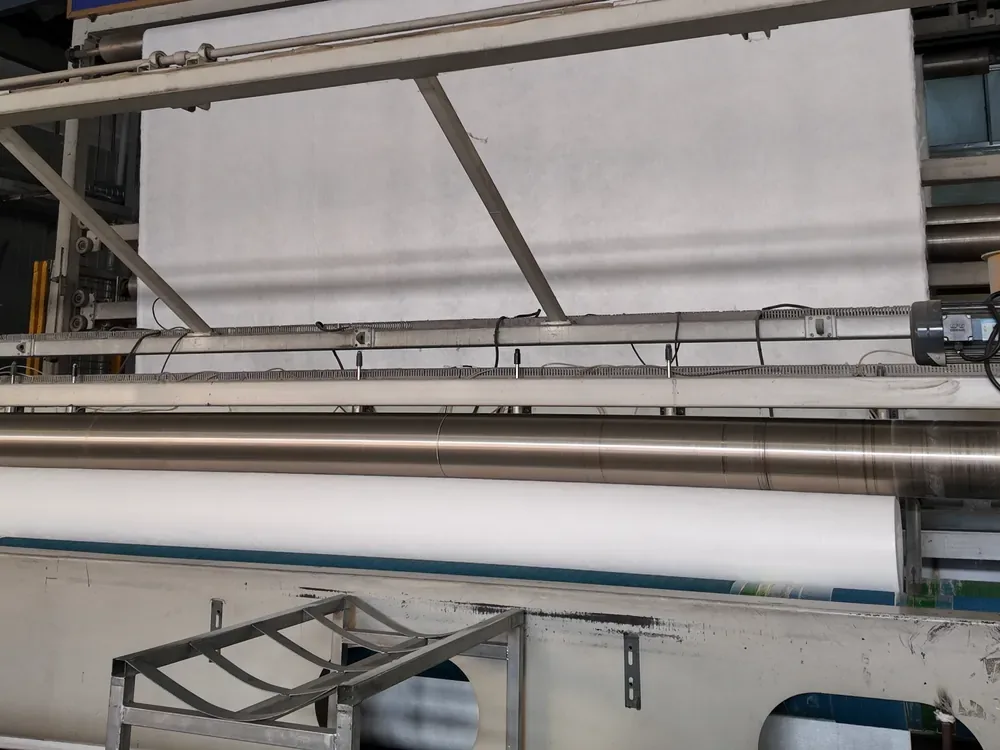
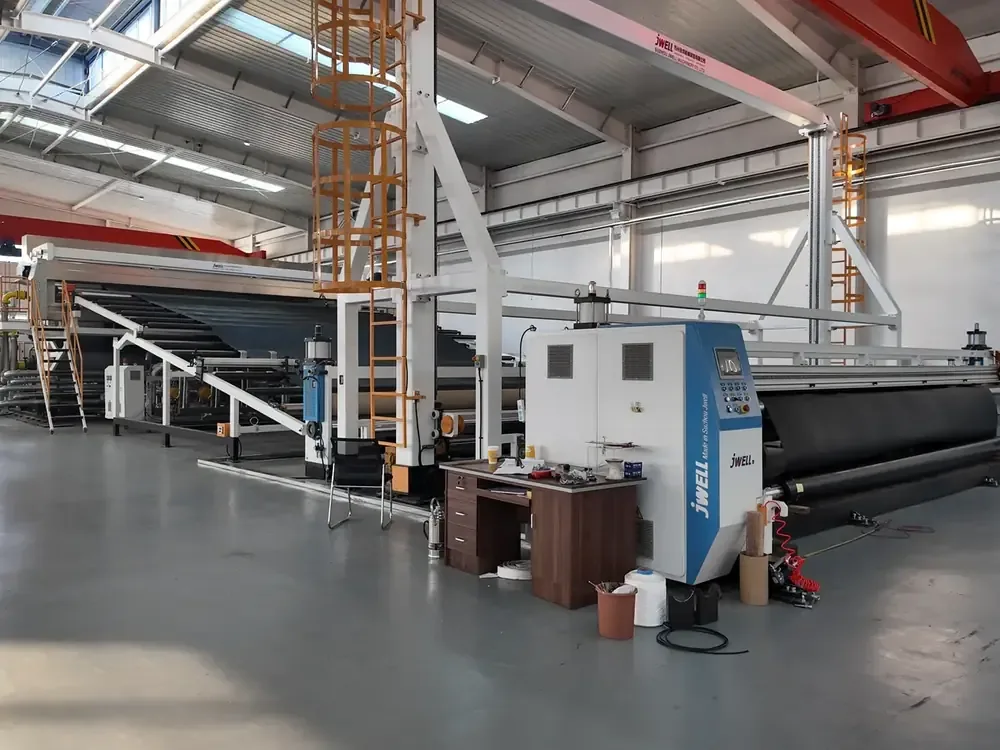
PLANT PHOTOS · FACTORY TOURPlant panorama15 lines · Lingcheng, Dezhou
01/ 08
15
production linesmembrane · textile · drainage · GCL · cement blanket
CAPABILITY
Plant and lines →Capacity, R&D and plant, in numbers
Fifteen lines across nine processes, 43 patent results, a 29,410 m² site and 12,000 m² of rooftop solar. Figures come from the equipment list and patent register.
R&DGranted and pending
43results in the patent register
43items
- Invention patents5
- Utility models30
- Pending8
Patents cover blown-film dies, coating, weld inspection and anchor structures; 8 new filings in 2025, 5 already granted.
PlantLingcheng, Dezhou
29,410m² site area
Site area29,410 m²
Built area18,350 m²
Rooftop solar12,000 m²
In-house laboratoryCE conformity
Laboratory 120 m² · 26 test instruments · 8,000 m² stock warehouse; membrane, textile, GCL and net made in one park.
PRODUCTS
Eight product families, specified by project
Each family has full parameters, a specification table and selection notes. The twelve common items below cover the main products and usual thicknesses; open a family for every model, or send the site conditions if selection is unclear.
8families
18models
12common items
Featured specificationsAll products →
GB standard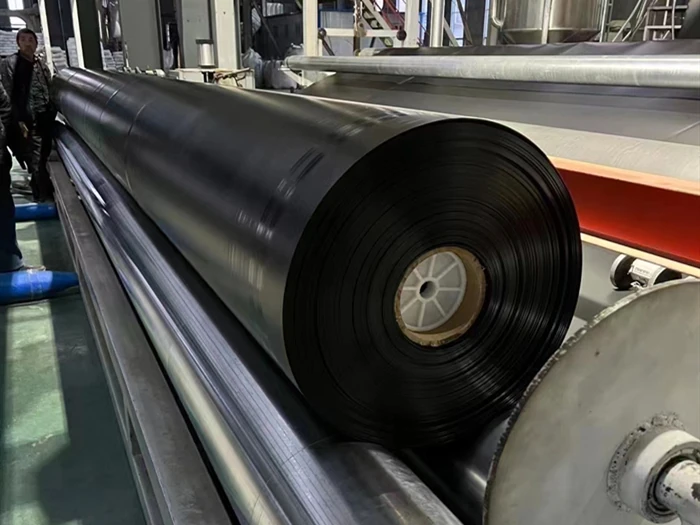
01
HDPE Geomembrane
HENGYANG · 010.5–3.0 mm, smooth / single-sided textured / double-sided textured
View product →GB standard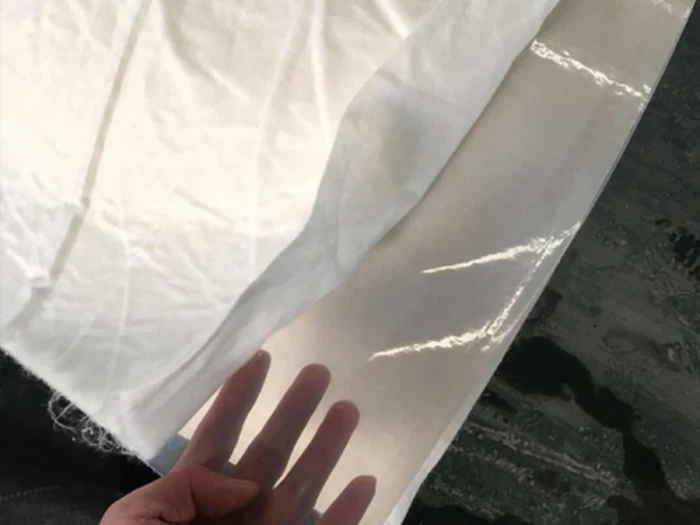
02
Composite Geomembrane
HENGYANG · 02one-layer / two-layer fabric, membrane 0.3–1.5 mm
View product →GB standard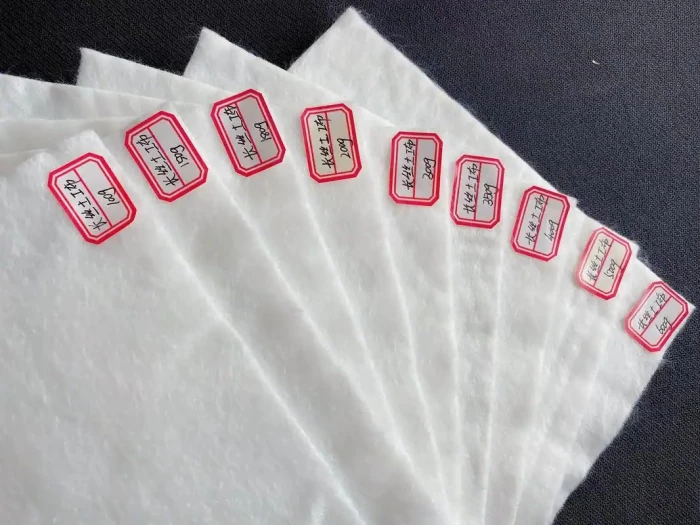
03
Geotextile
HENGYANG · 03filament 100–800 g/m², staple 100–600 g/m²
View product →GB standard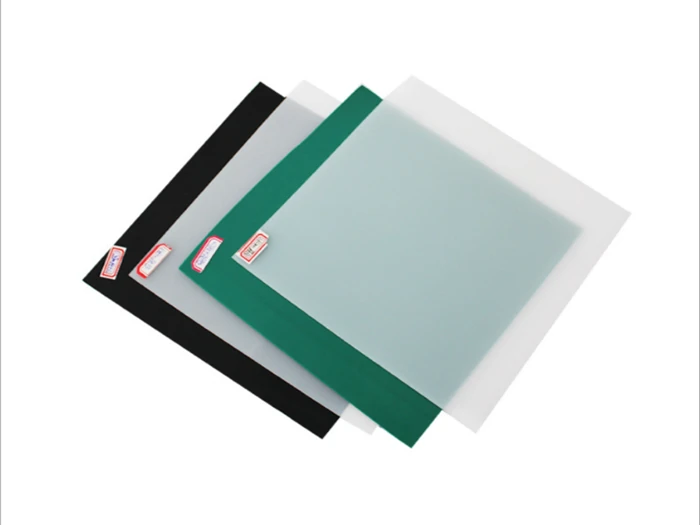
04
Tunnel Waterproofing Board
HENGYANG · 04thickness as designed, width tailored to tunnel section
View product →GB standard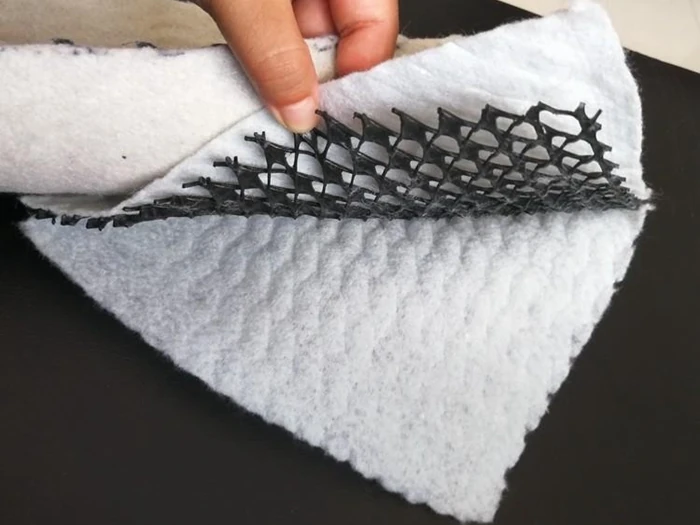
05
Geocomposite Drainage Net
HENGYANG · 05core 5–8 mm, single / double geotextile lamination
View product →GB standard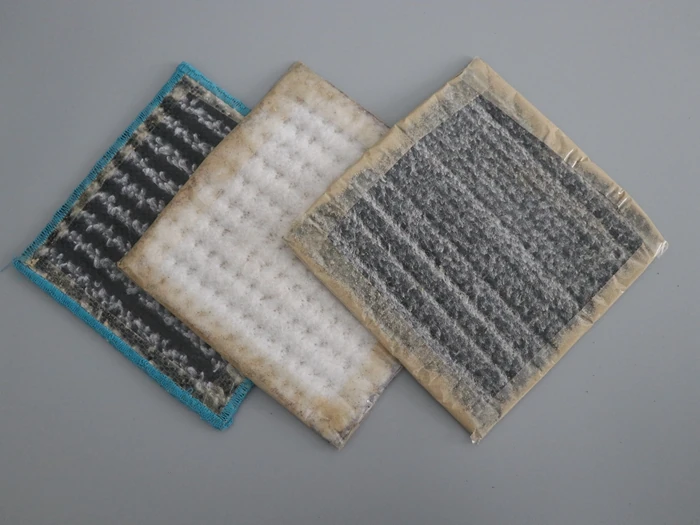
06
GCL Bentonite Liner
HENGYANG · 06mass 4,000–5,500 g/m²
View product →GB standard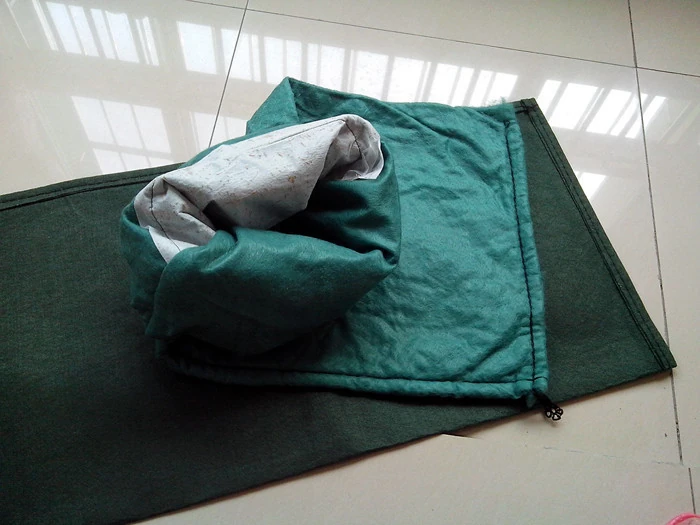
07
Ecological Bag
HENGYANG · 07selected by slope and revegetation design
View product →GB standard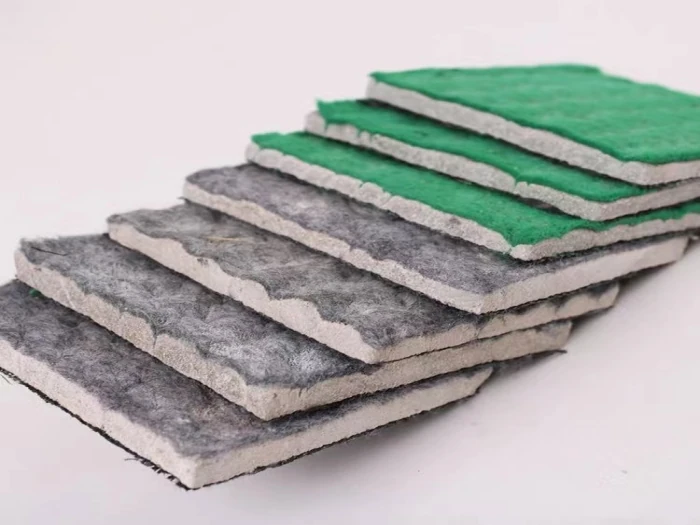
08
Cement Blanket
HENGYANG · 08selected by canal and slope design
View product →Textured surface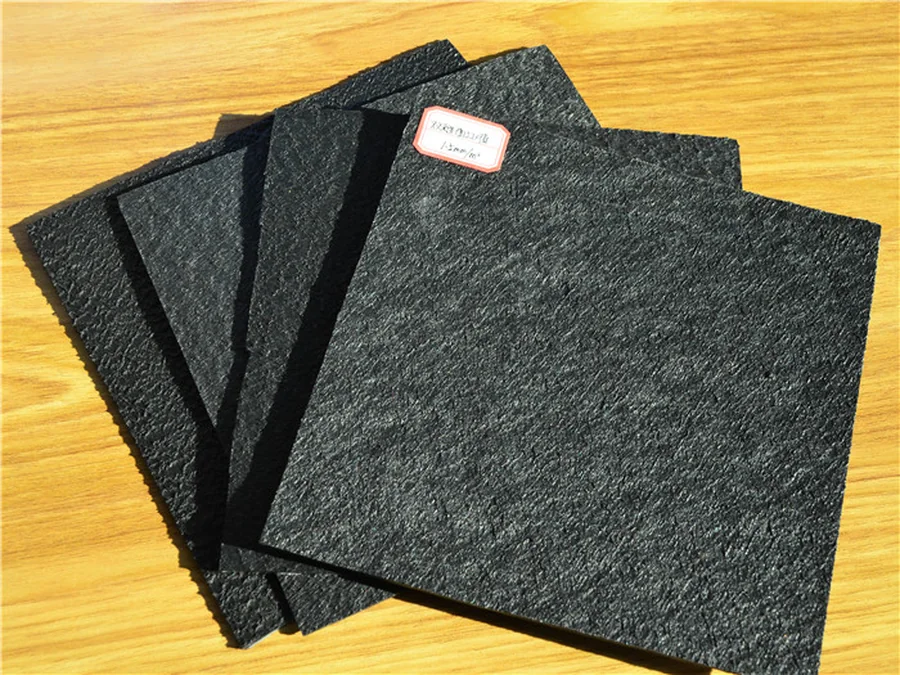
09
Textured HDPE Geomembrane
HENGYANG · 01ASingle / double textured, 1.0–2.0 mm
View specification →Stud surface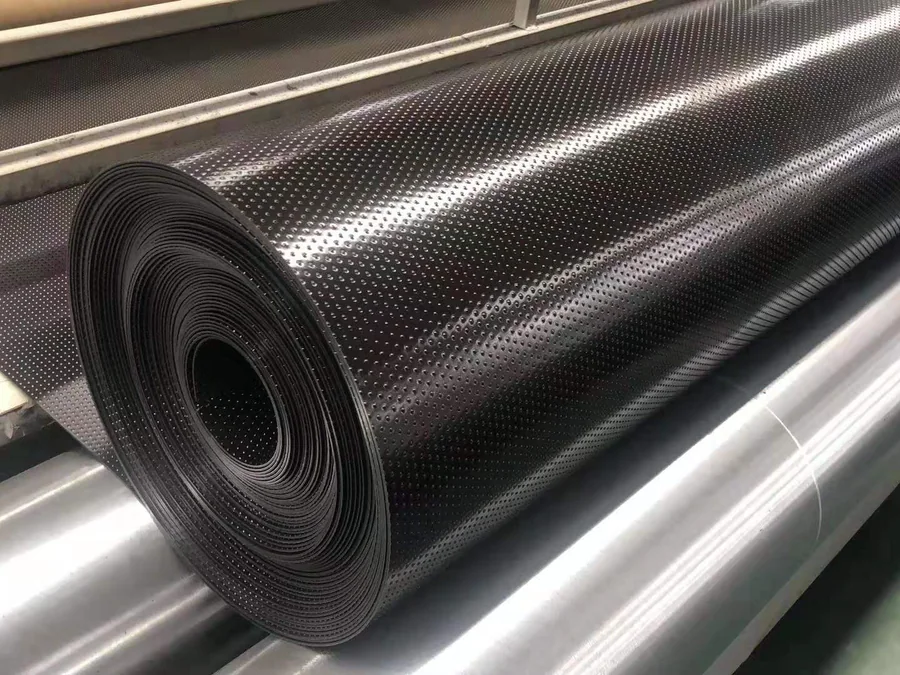
10
Column-point HDPE Geomembrane
HENGYANG · 01BStud height 0.5–1.0 mm, 1.0–2.0 mm thick
View specification →Filament grade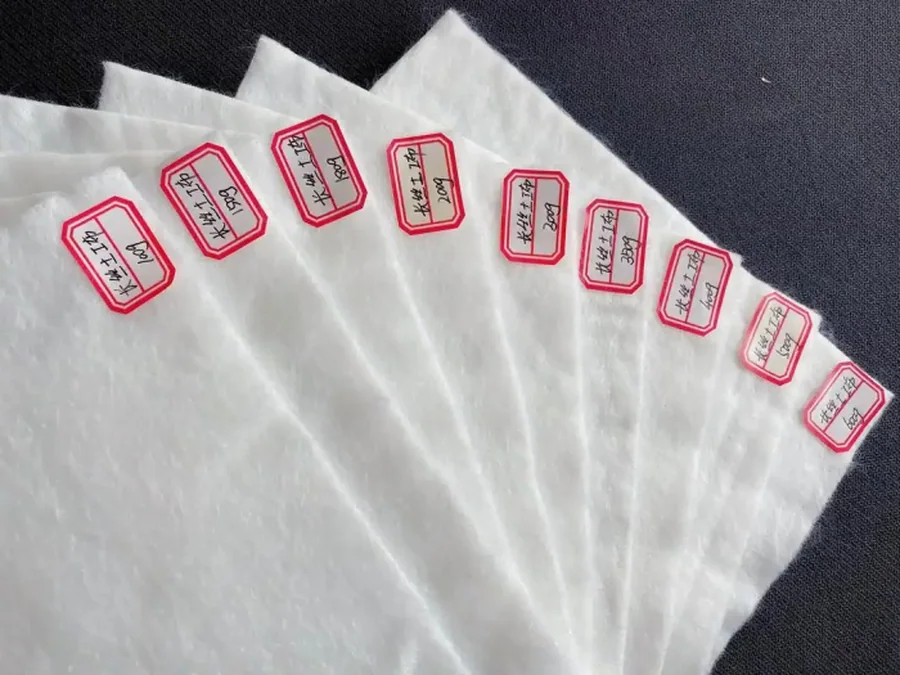
11
Filament Geotextile
HENGYANG · 03B100–800 g/m², filament spunbond needle-punched
View specification →Composite liner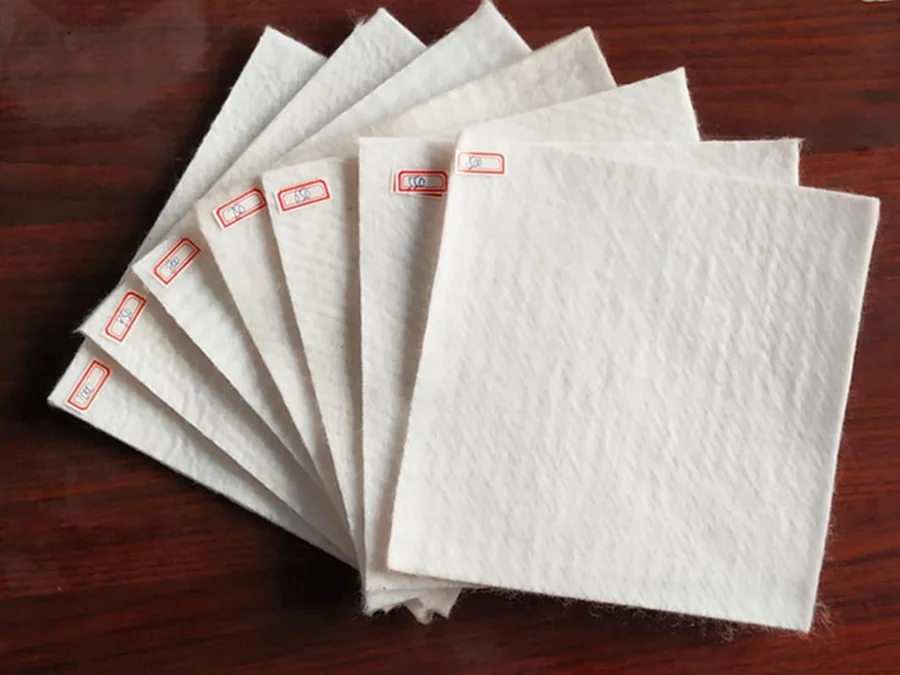
12
Two-cloth One-membrane
HENGYANG · 02ATwo cloth / one membrane, 0.3–1.5 mm
View specification →APPLICATIONS
Start from the working condition
Landfill, tailings, biogas, reservoir, lake, wastewater, tank farm, slope and canal each have a material combination and acceptance points.
12applications
8families
4selection steps
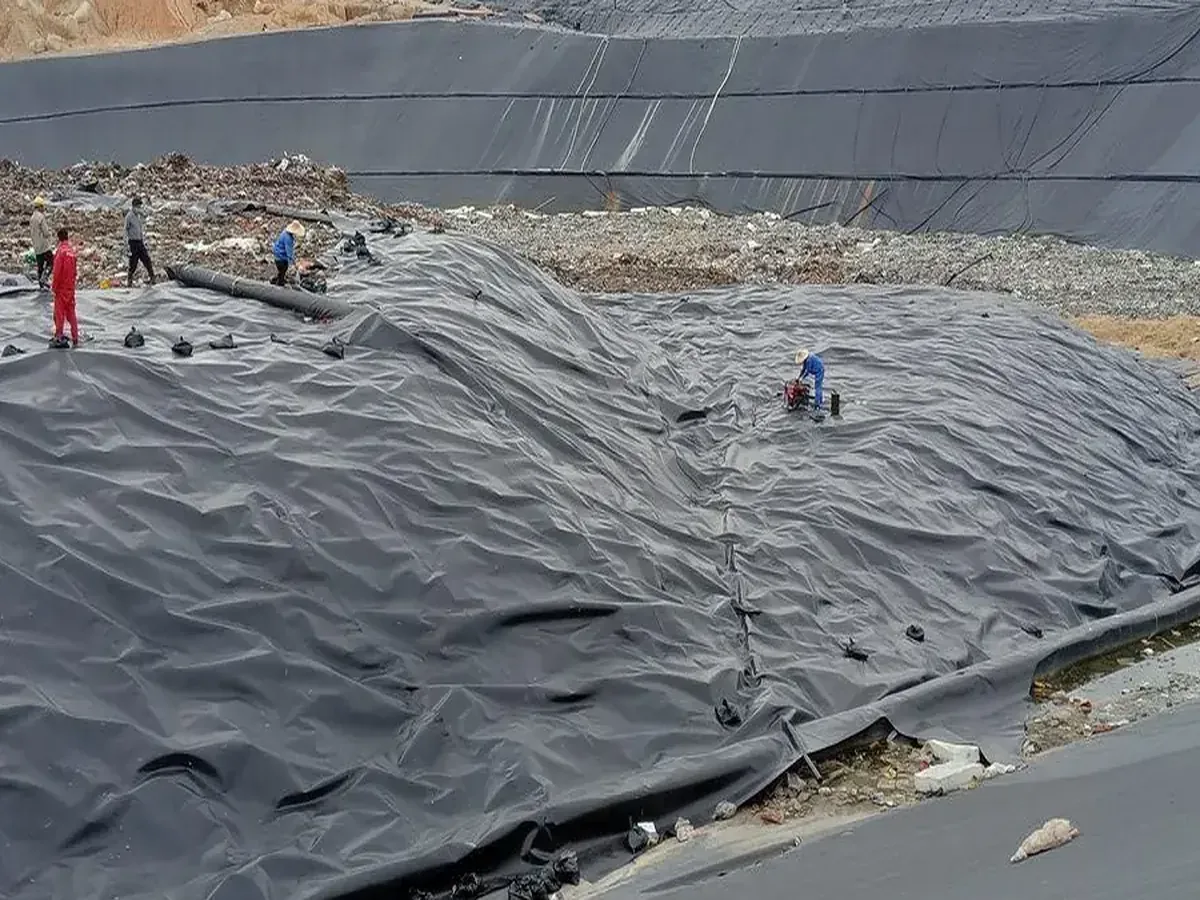 01
Landfill lining (MSW)
A double liner across the base and side slopes, so leachate never reaches groundwater.
Materials and installation →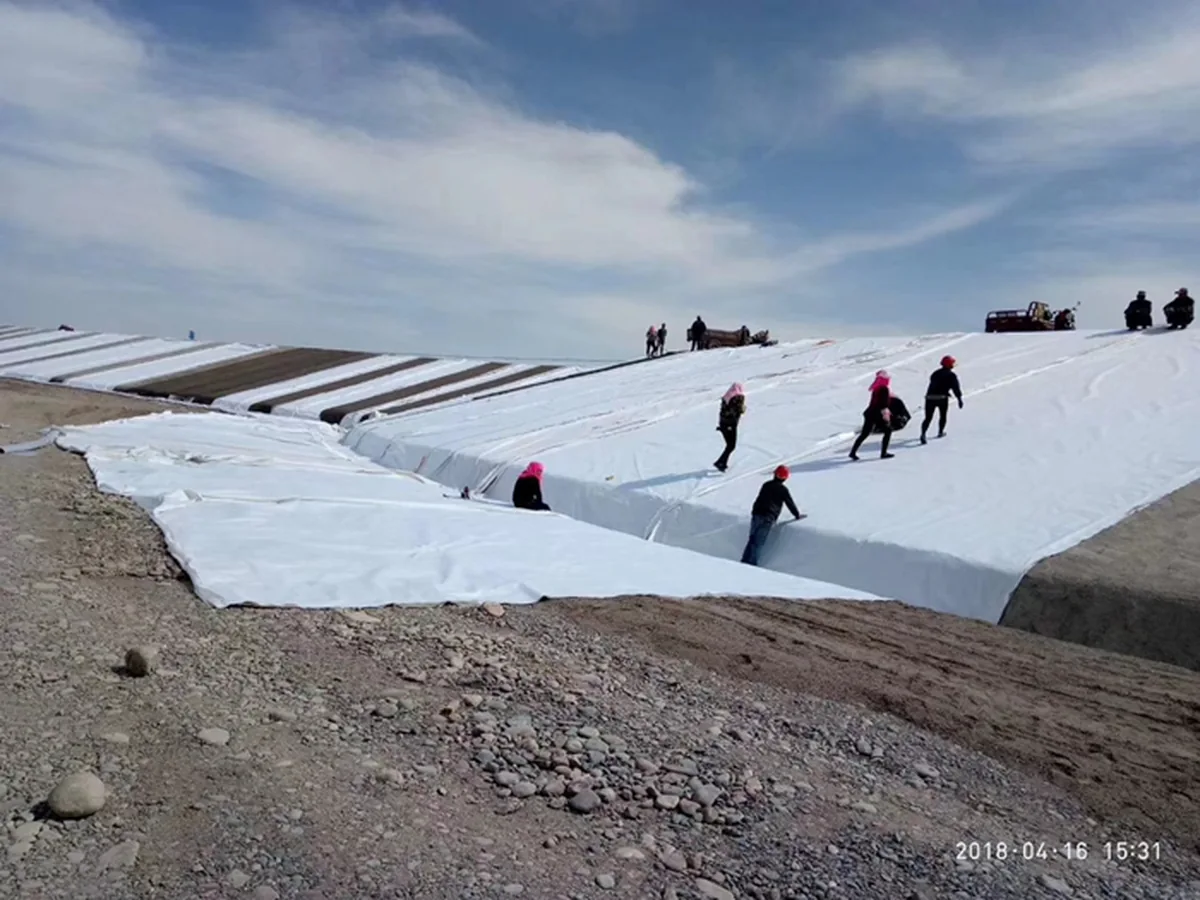 02
Rigid cell landfill
HDPE lining inside a concrete cell — the details decide whether it holds.
Materials and installation →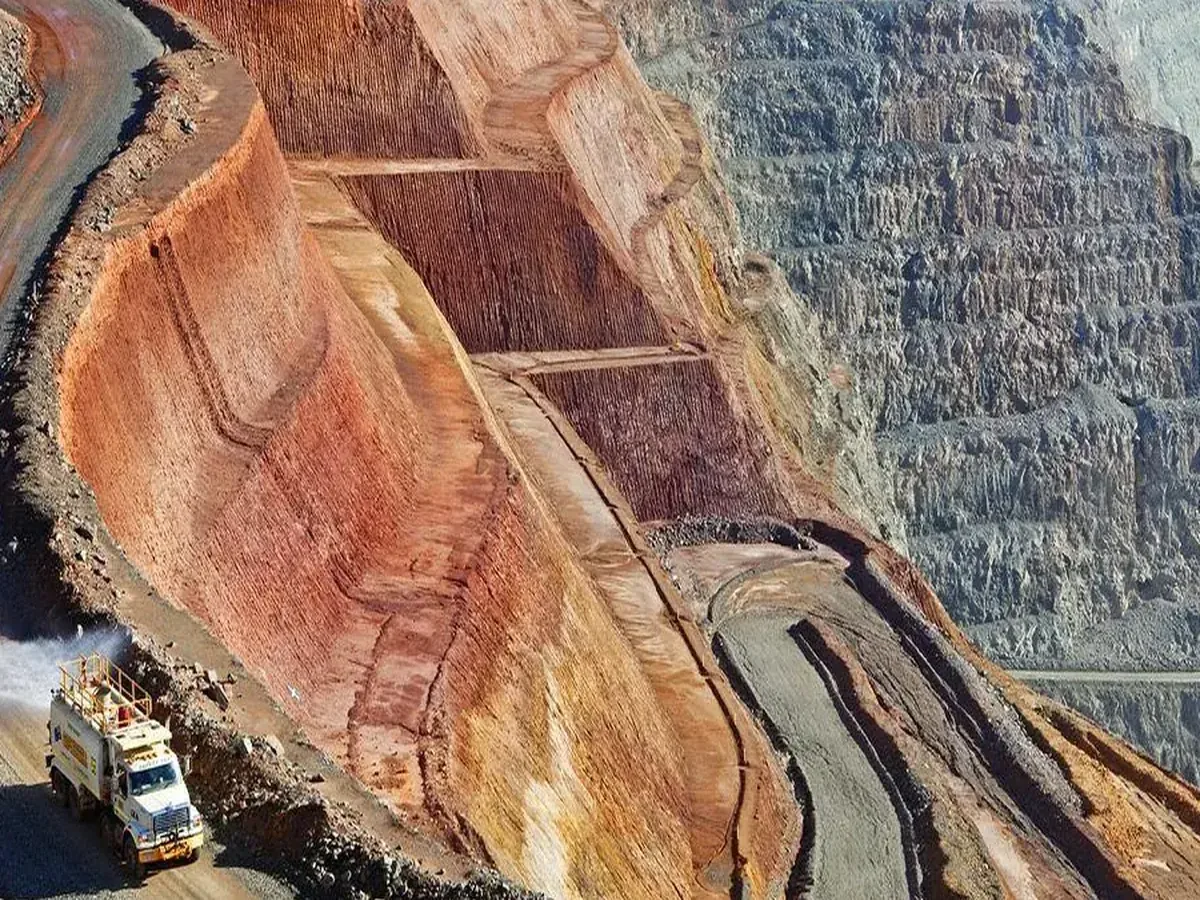 03
Tailings storage facility
A liner that resists the tailings chemistry, with leakage monitoring built in.
Materials and installation →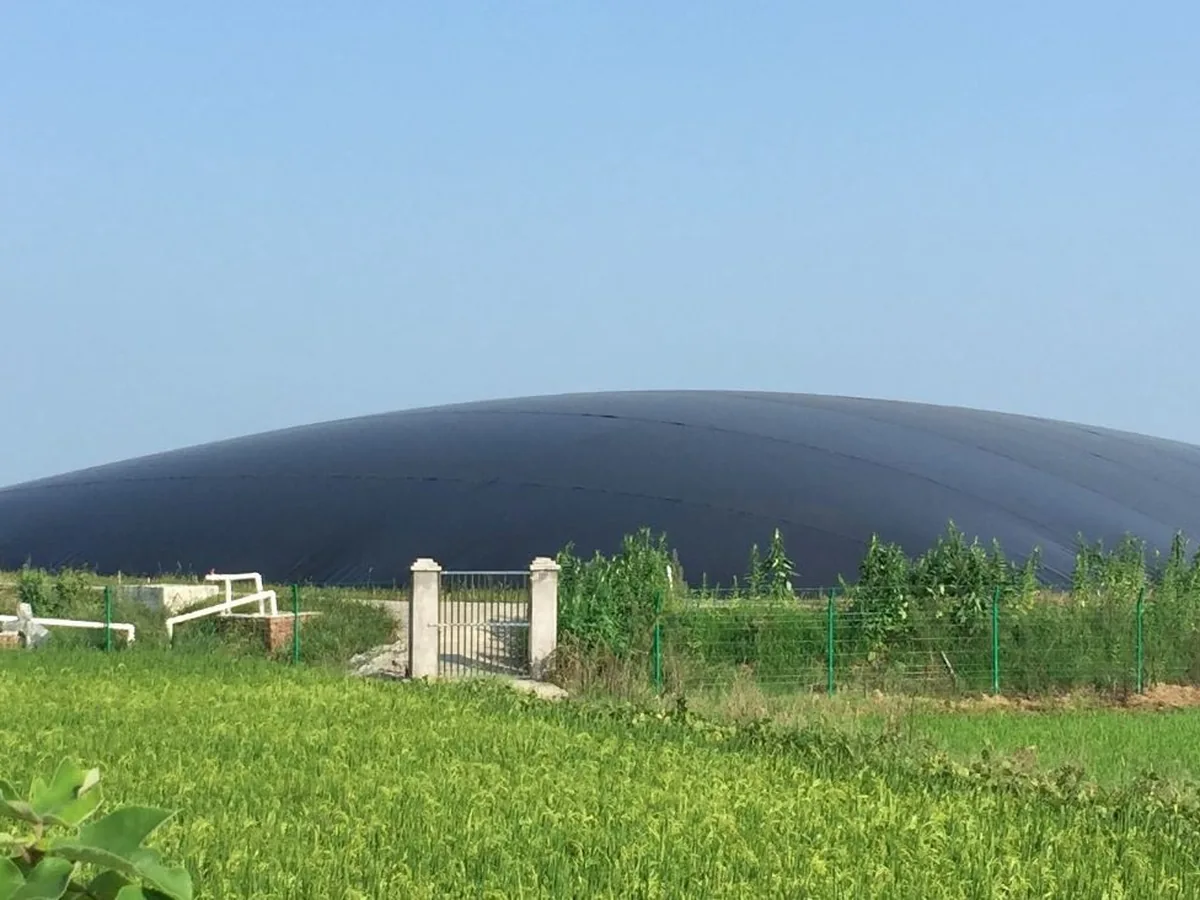 04
Covered anaerobic lagoon
One membrane does two jobs: bottom sealing and top gas containment.
Materials and installation →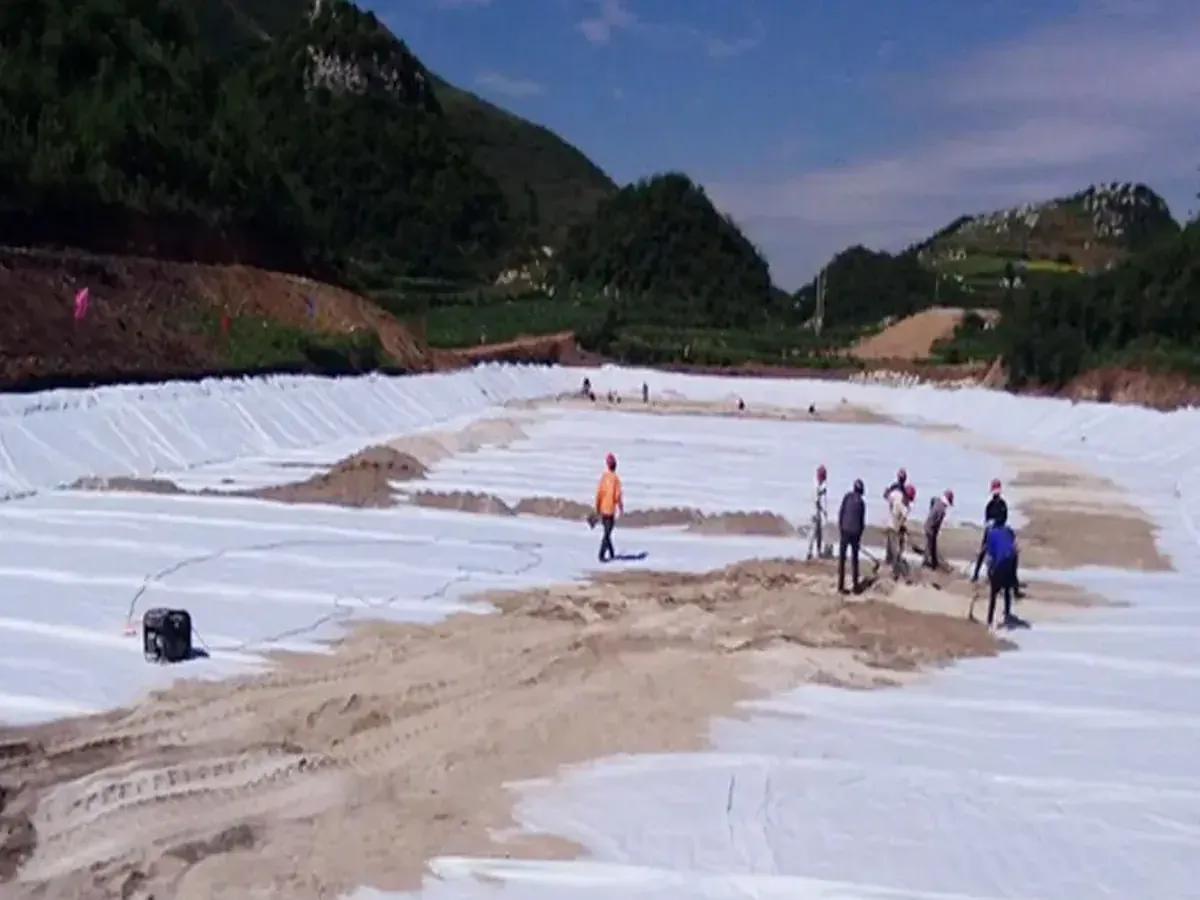 05
Reservoir and storage pond
Material chosen by head and deformation, for basin floor and dam face.
Materials and installation →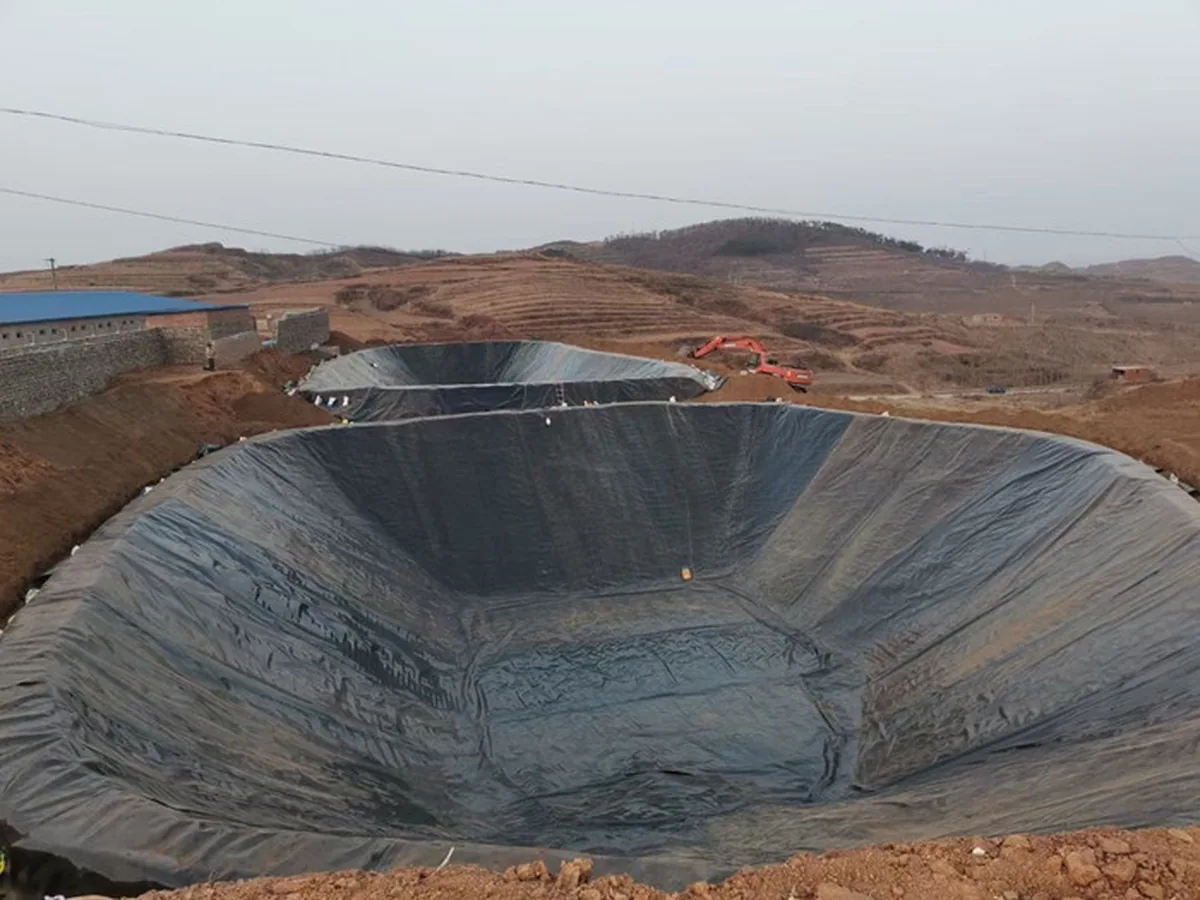 06
Artificial and landscape lake
For irregular basins, GCL first — it also keeps the ecological edge.
Materials and installation →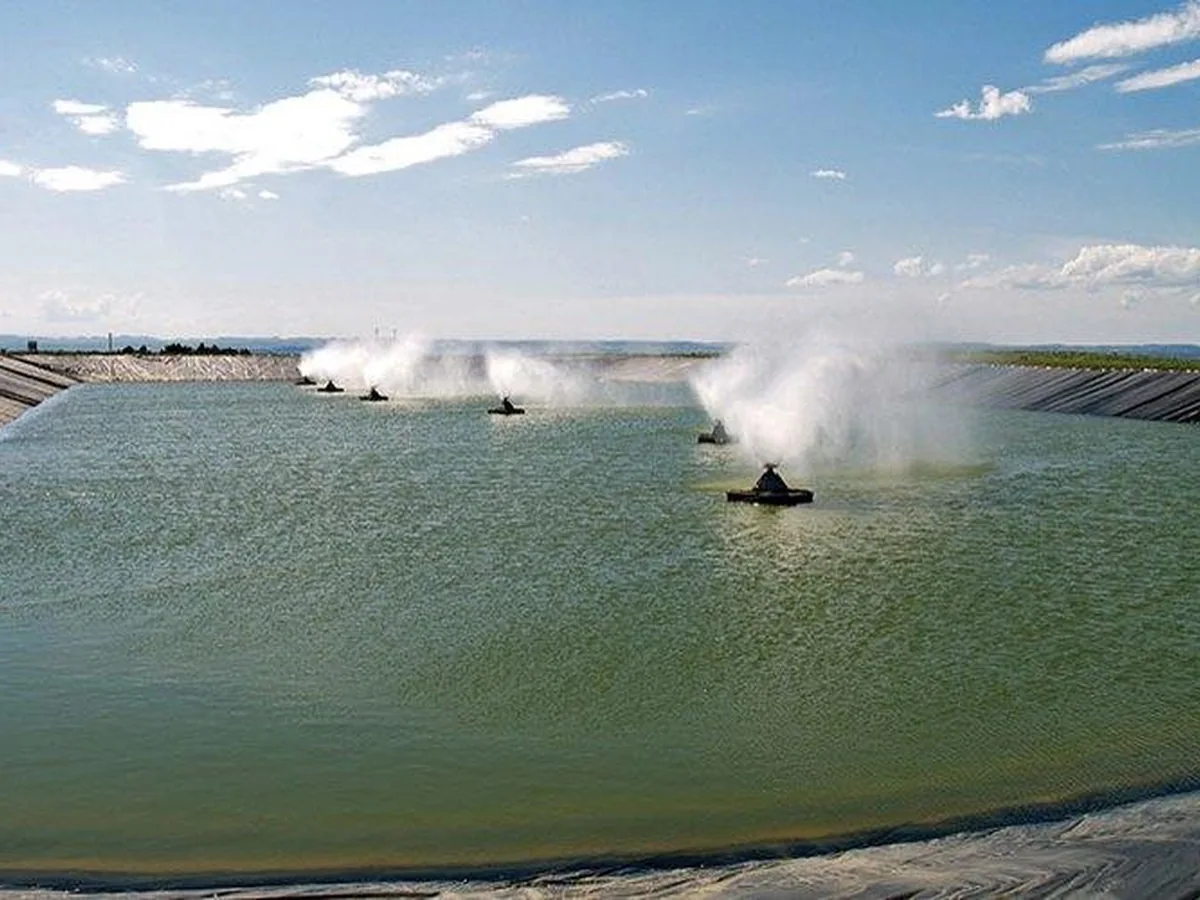 07
Wastewater pond and oxidation lagoon
Resists the effluent, and the corners and pipe entries decide the result.
Materials and installation →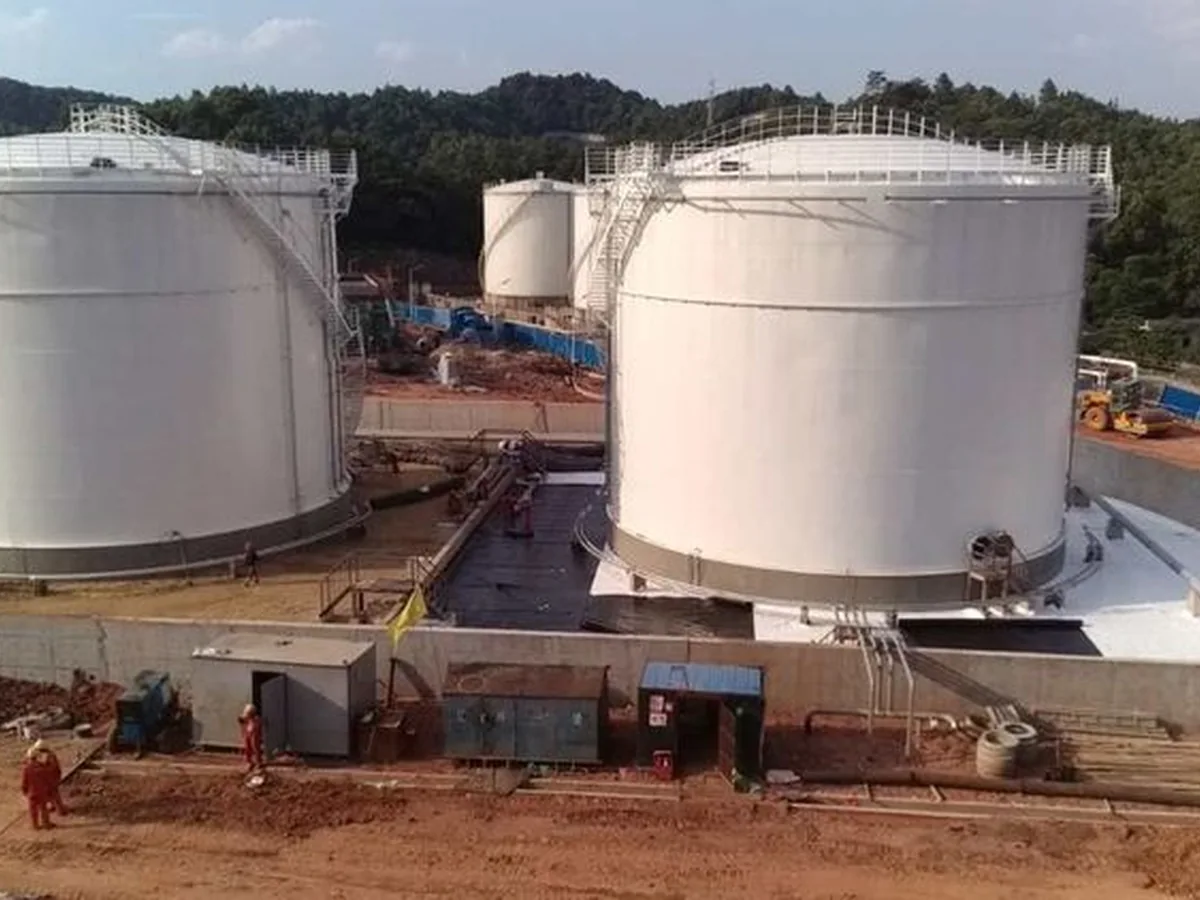 08
Tank farm and chemical terminal
Double membrane with a detection layer, so a leak is found rather than discovered later.
Materials and installation →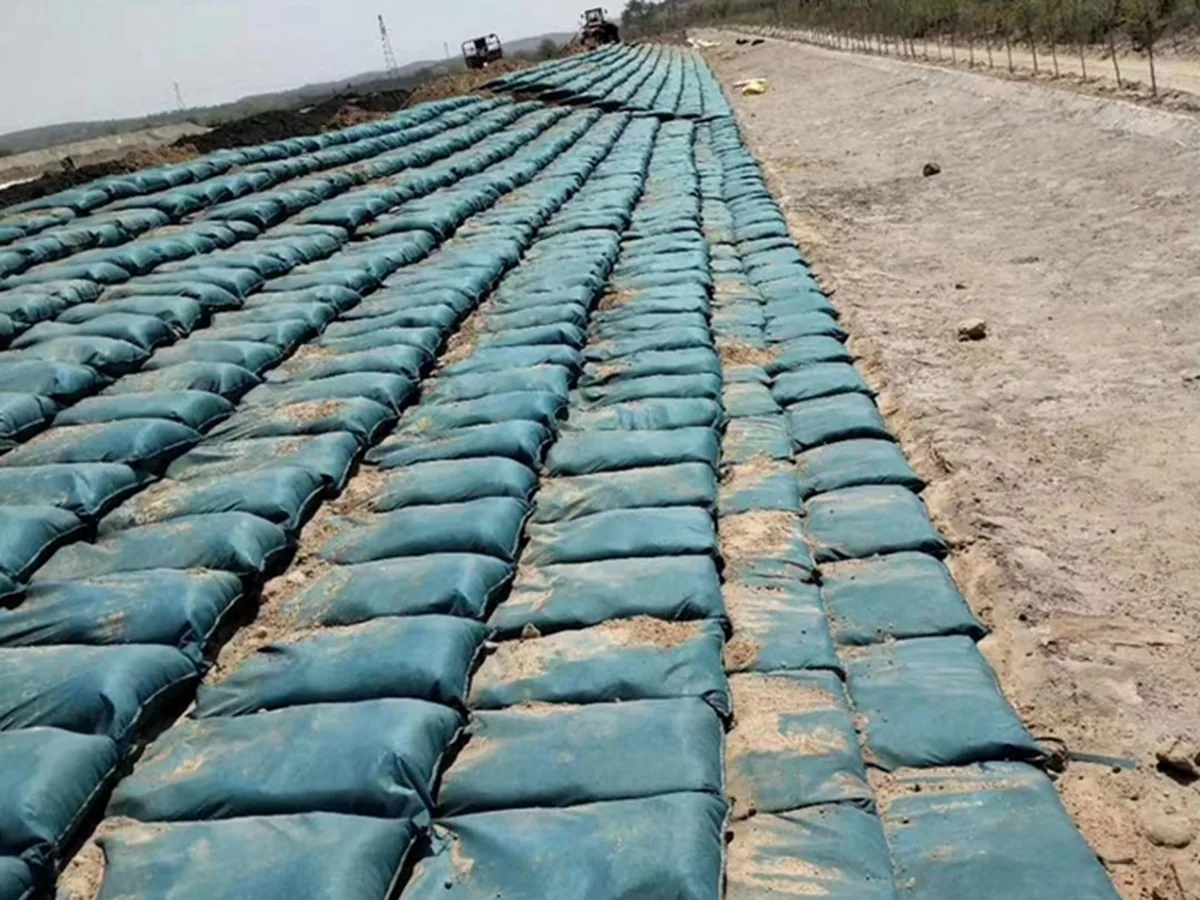 09
Hydraulic slope and bank protection
Graded by flow velocity: scour resistance and ecology calculated together.
Materials and installation →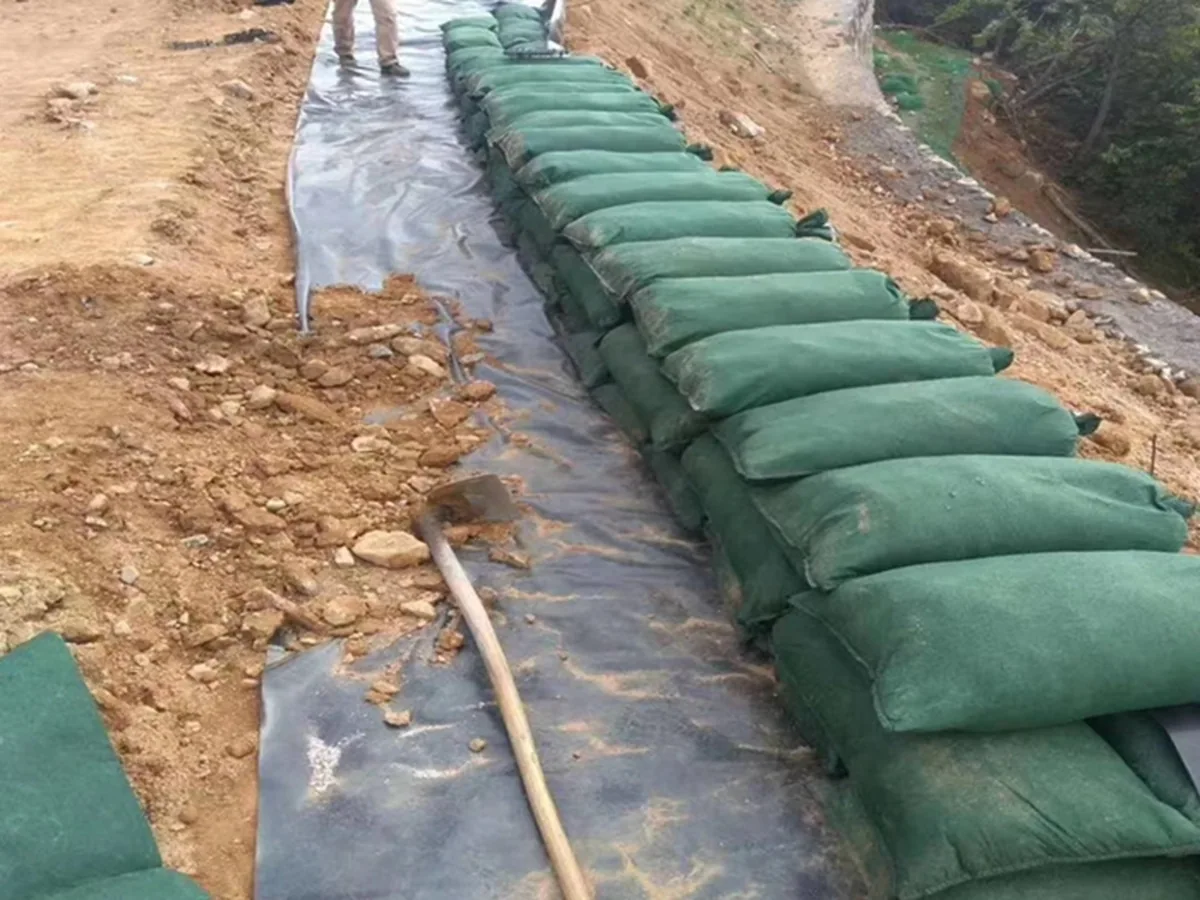 10
Canal and irrigation district lining
Composite geomembrane — one fabric, one membrane — cuts site work.
Materials and installation →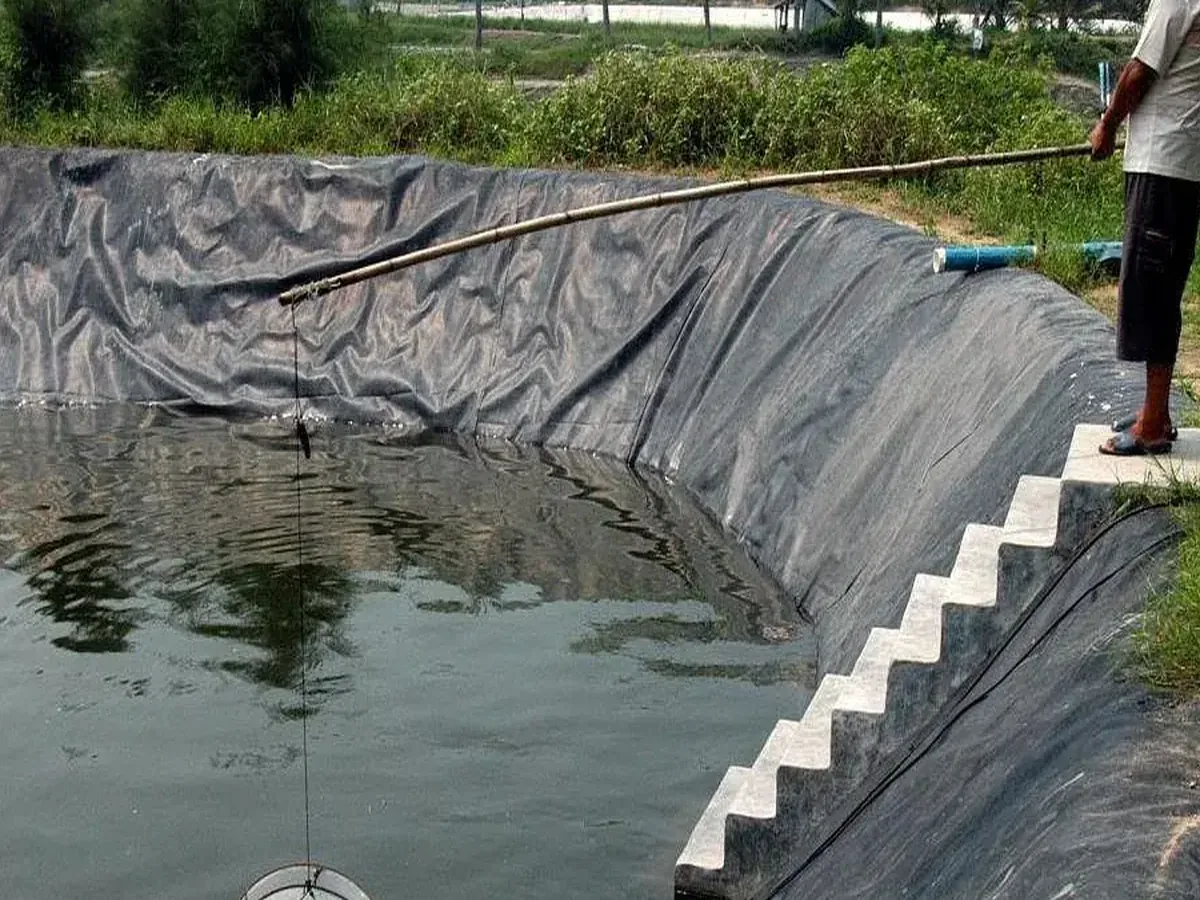 11
Aquaculture pond lining
0.5—1.0 mm membrane, with puncture resistance and dredging both in mind.
Materials and installation →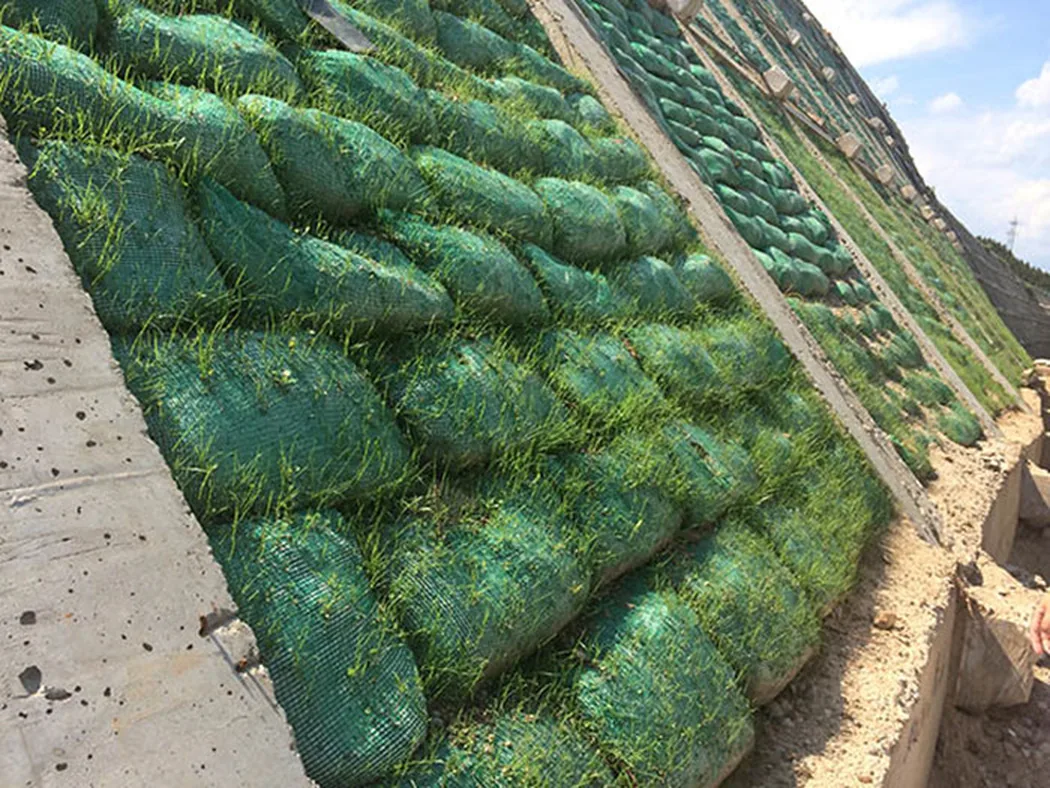 12
Slope remediation and mine revegetation
Stabilise first, then revegetate; drainage matters more than grass seed.
Materials and installation →
WHY HENGYANG
A material is usable only when these eight points hold
Standard participation, batch testing, installation qualifications and local service can each be checked on the certification page, standards page or plant floor. Look at the plant and lines first, then decide whether the material can enter the site.
15production lines
43patent results
29,410m² site area
333prefecture-level cities served
EIGHT CHECKS
Company profile →Every claim lands on paper or on site
01Standard drafter
Drafter of mandatory GB 45320-2025 and a contributor to T/CBMF 240-2023. The requirements are written into the standard and applied on the lines.
02Batch testing
In-house laboratory tests thickness, tensile, OIT, carbon black and puncture; a batch report travels with the goods.
03Source lines
Fifteen lines cover membrane, textile, drainage net, GCL and cement blanket. Width and roll length are made to order to cut site seams.
04Export compliance
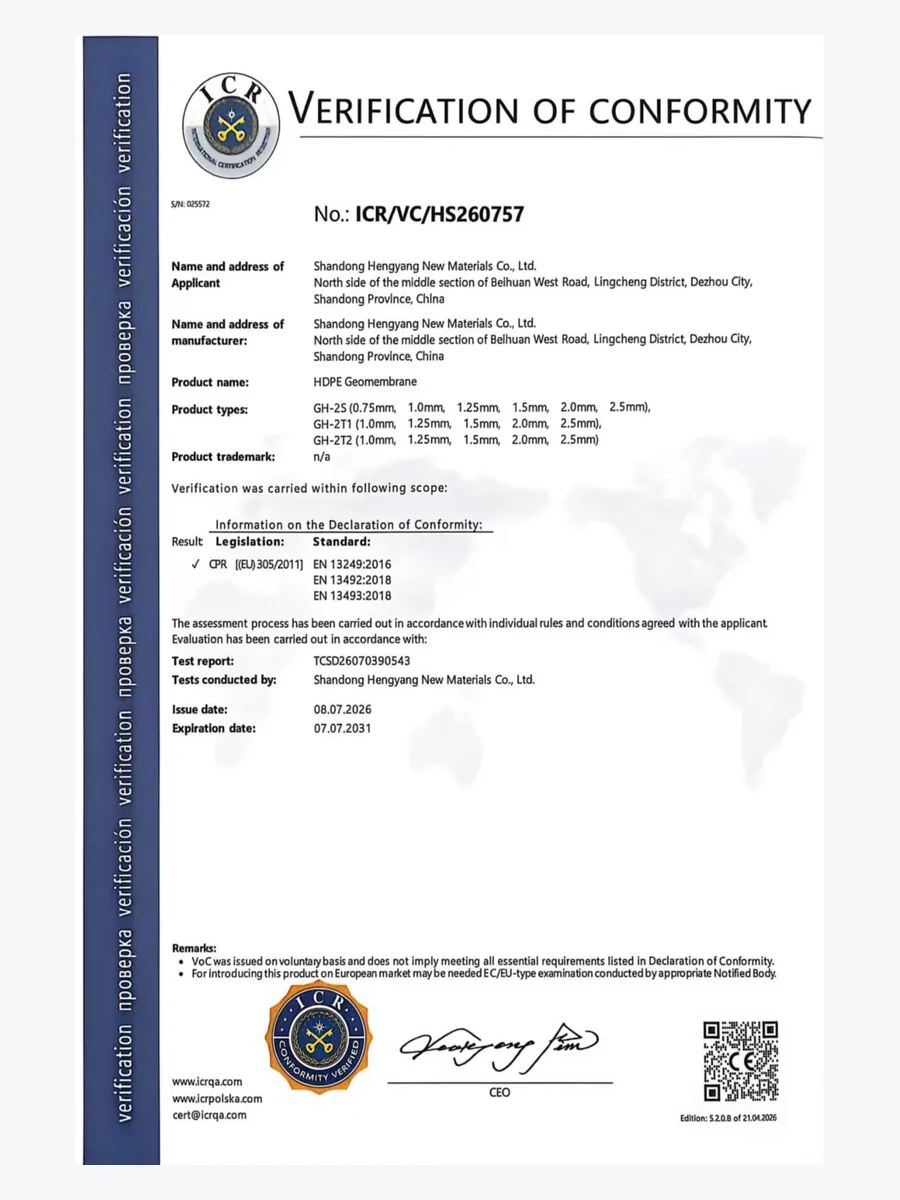
CE conformity ICR/VC/HS260757; production to EN 13249 and EN 13492; English datasheets available.
05Stock and lead time
Common thicknesses and weights are stocked; urgent project orders are prioritised and shipped full-truck to site.
06Acceptance support
Batch reports and certificates travel with the goods; third-party testing is arranged on request; weld and damage records are traceable.
07Installation qualifications
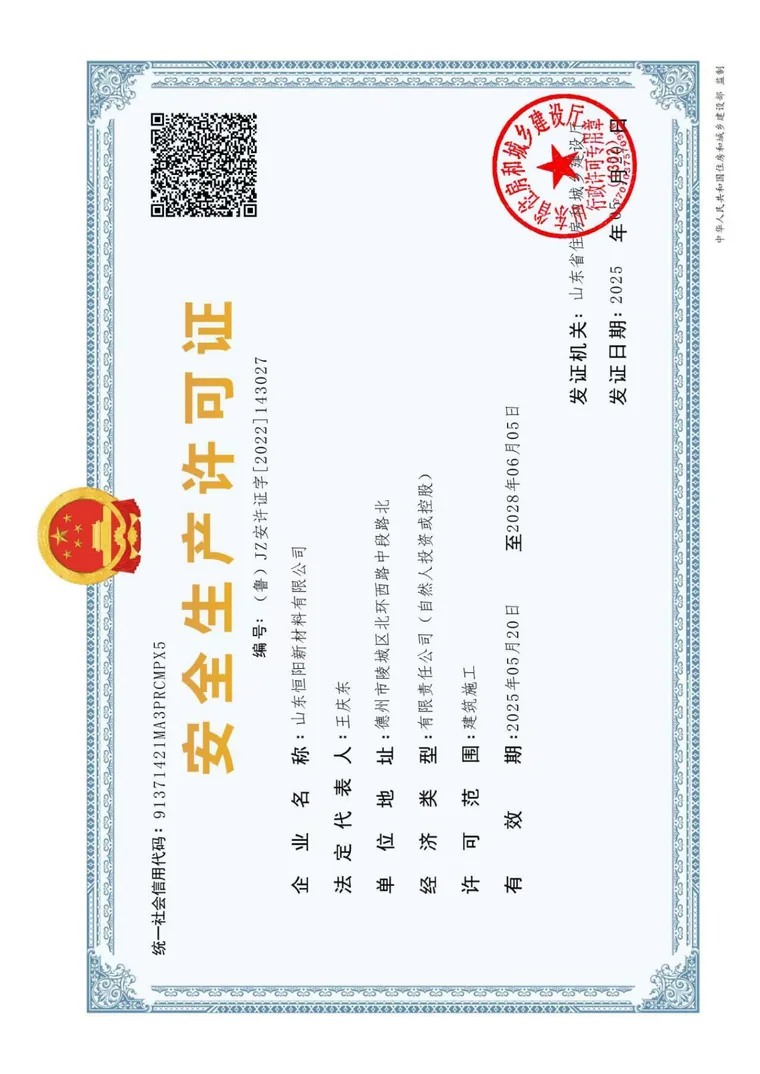
Waterproofing and environmental engineering licences in house, so material and installation interface sit with one team.
08Local service
Supply notes for 31 provinces and 333 prefecture-level cities, with nearby references and transit times.
STANDARDS
Published standards, comparable parameters
Bids respond to the current edition; project values follow the design documents and batch report.
17643GB/T geomembrane
17642GB/T composite
45320GB drafter
| Standard | Title | Our role |
|---|---|---|
| GB/T 17643-2025 | Polyethylene geomembrane for geosynthetics | Production standard |
| GB/T 17642-2025 | Nonwoven composite geomembrane | Production standard |
| GB/T 17638-2017 | Short-fibre needle-punched nonwoven geotextile | Production standard |
| GB/T 17639-2008 | Filament spunbond needle-punched geotextile | Production standard |
| GB 45320-2025 | Safety and general specification for waterproofing sheets | Drafter |
| CE ICR/VC/HS260757 | EU construction products conformity | Valid to 2031-07-07 |
CERTIFICATIONS
Certificates, originals available for checking
Construction qualification, safety licence, ISO systems and CE conformity, each with number and validity on the certification page.
36certificates
5systems
Originalcheckable
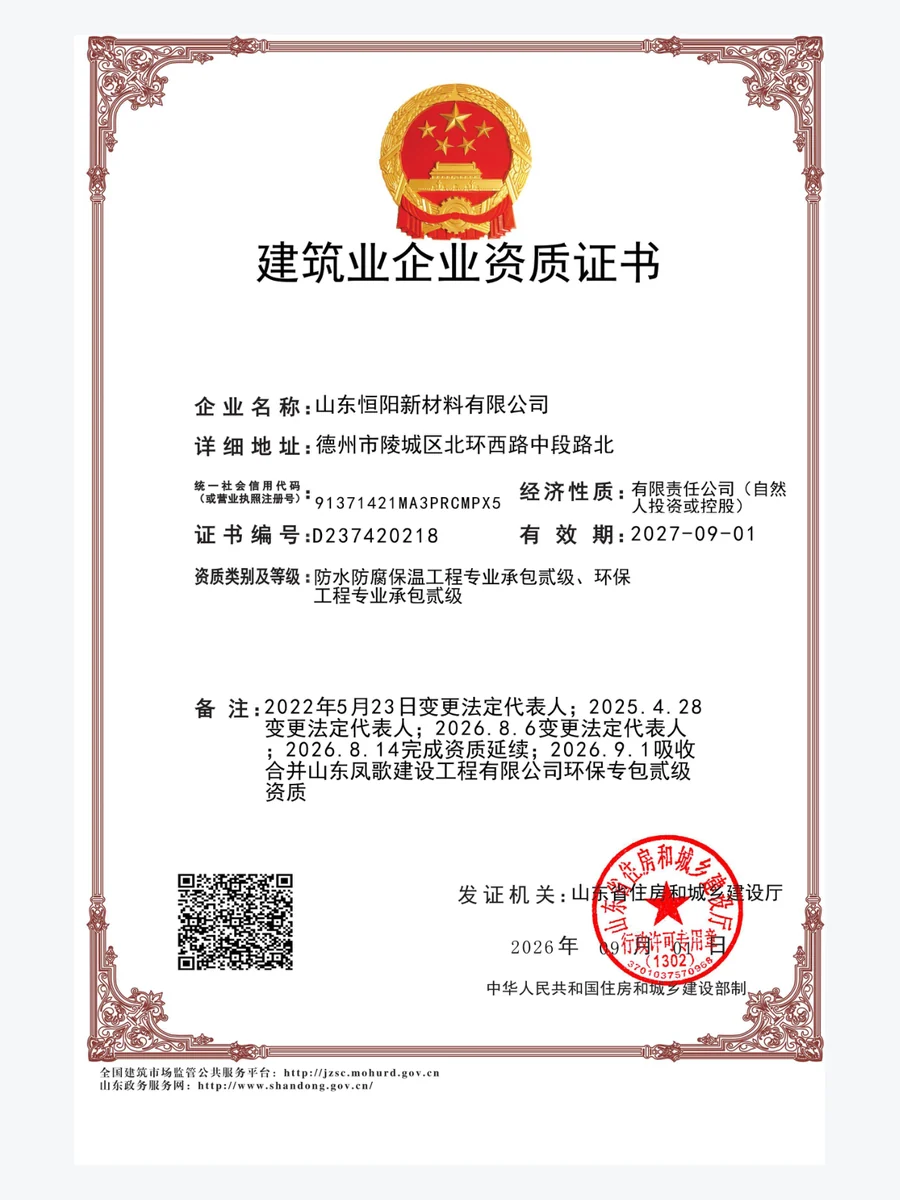
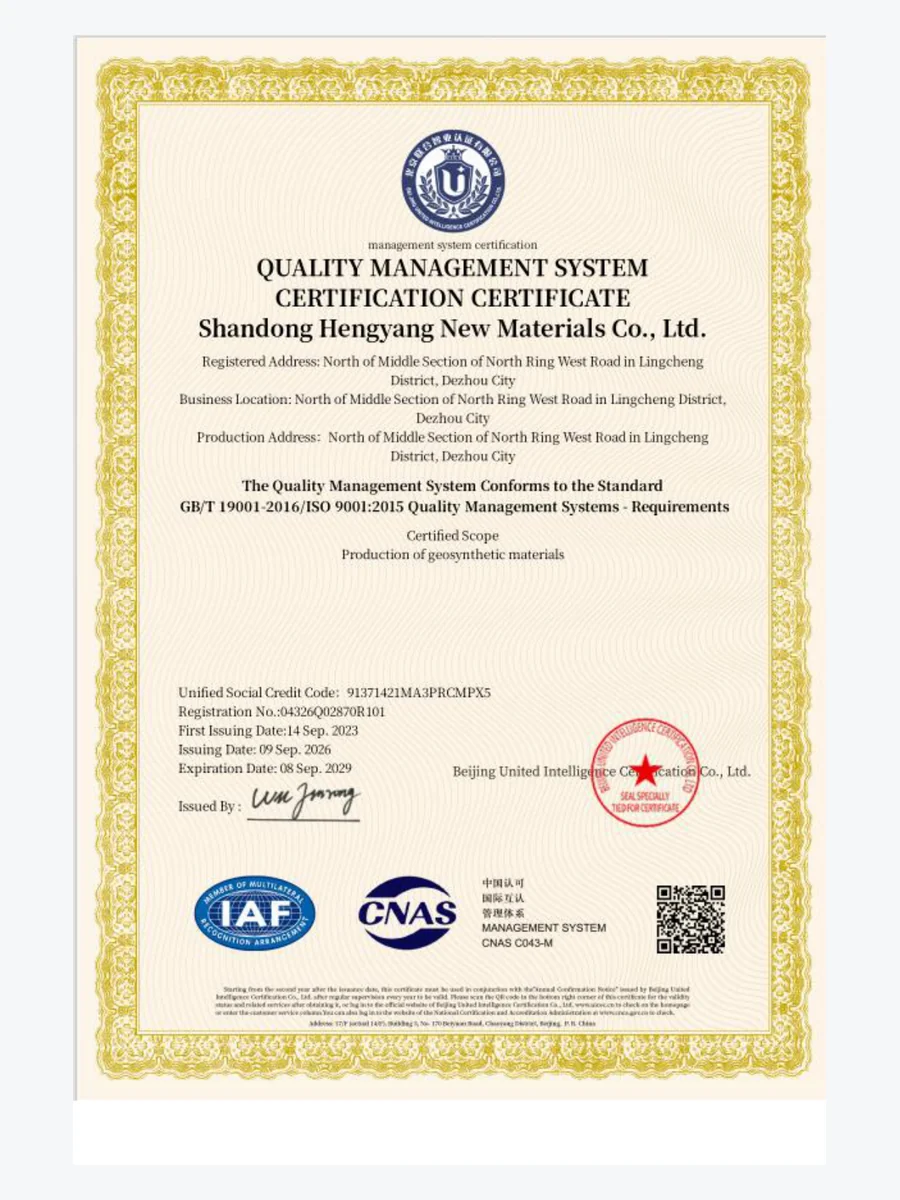
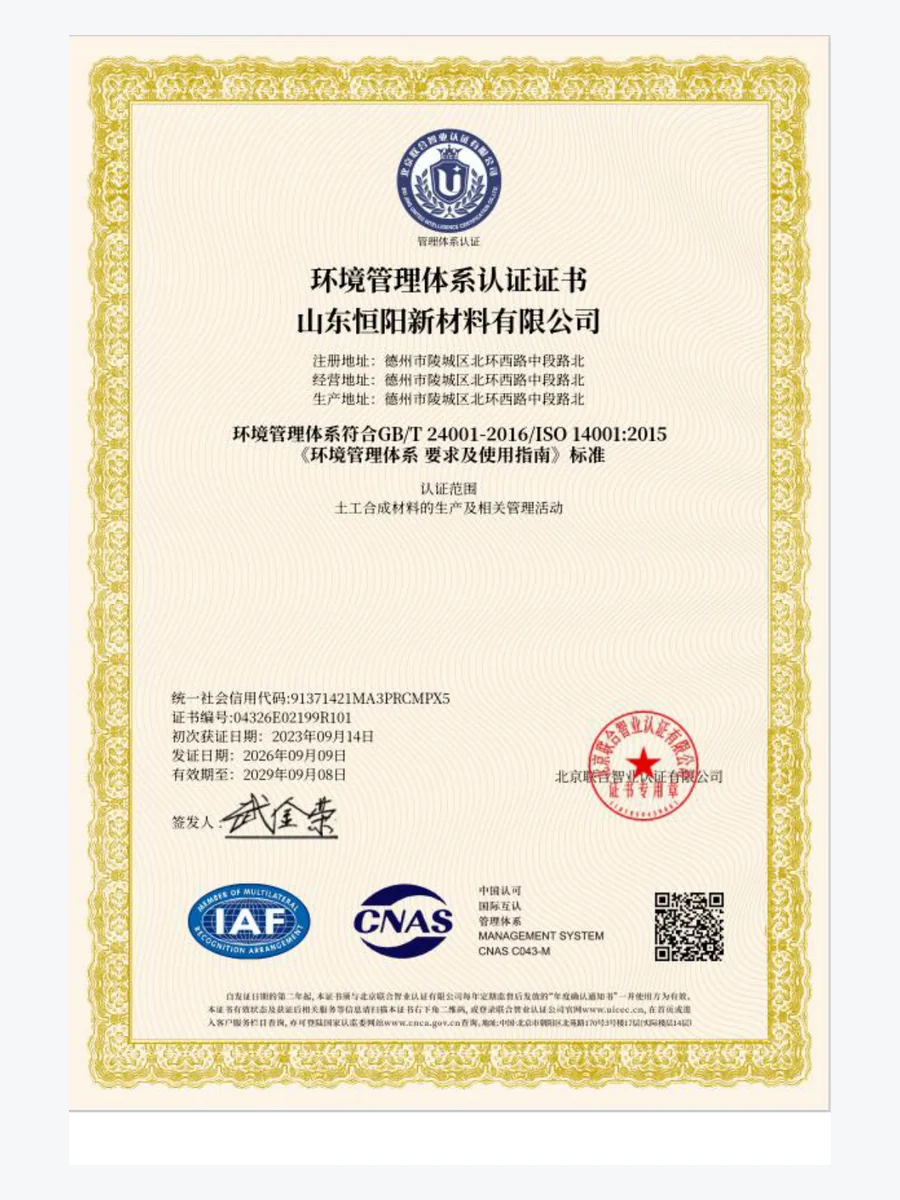
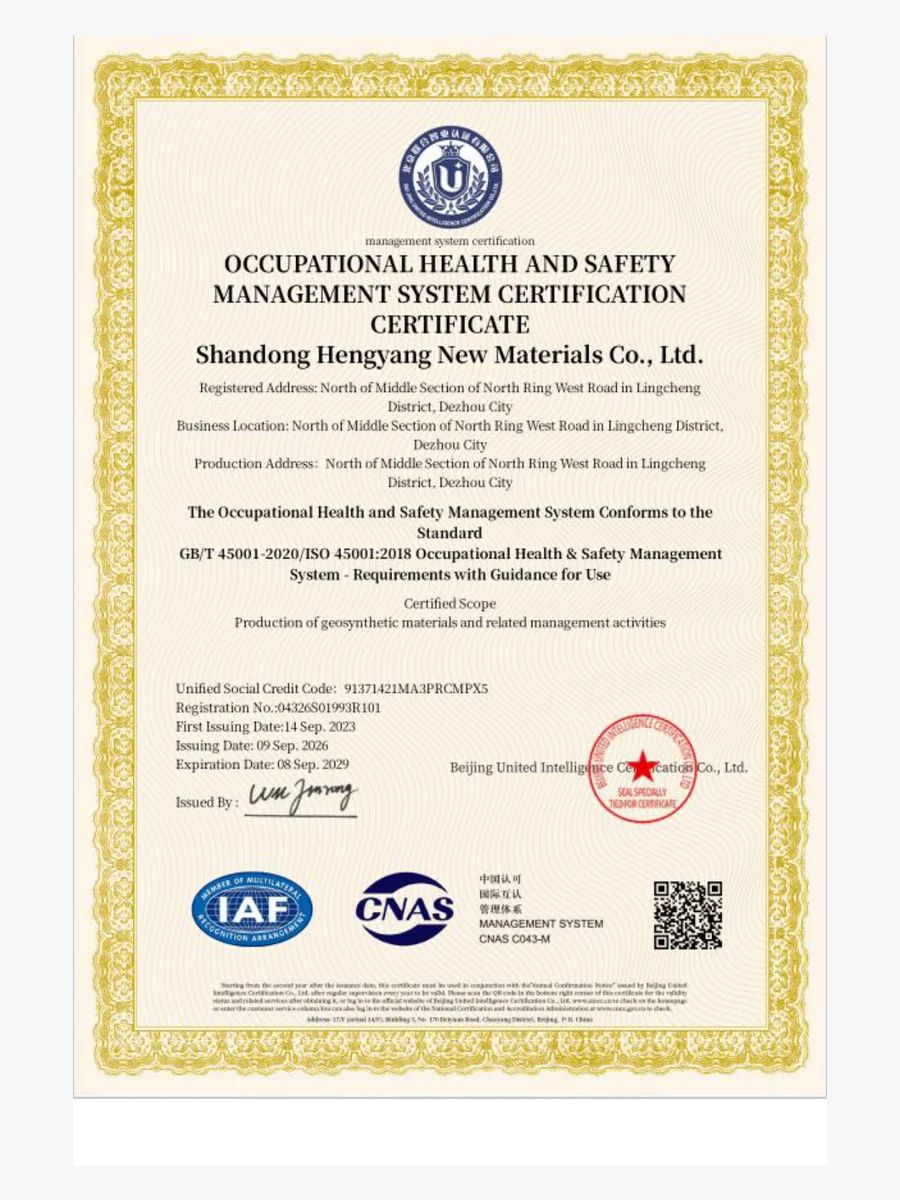
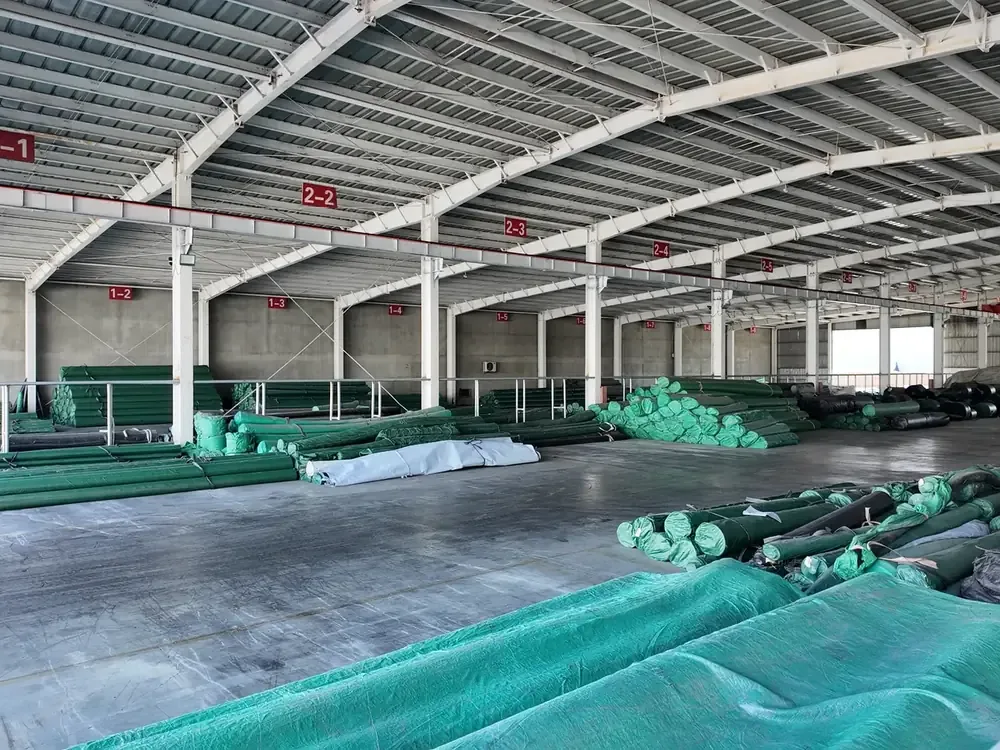
PLANT PHOTOS
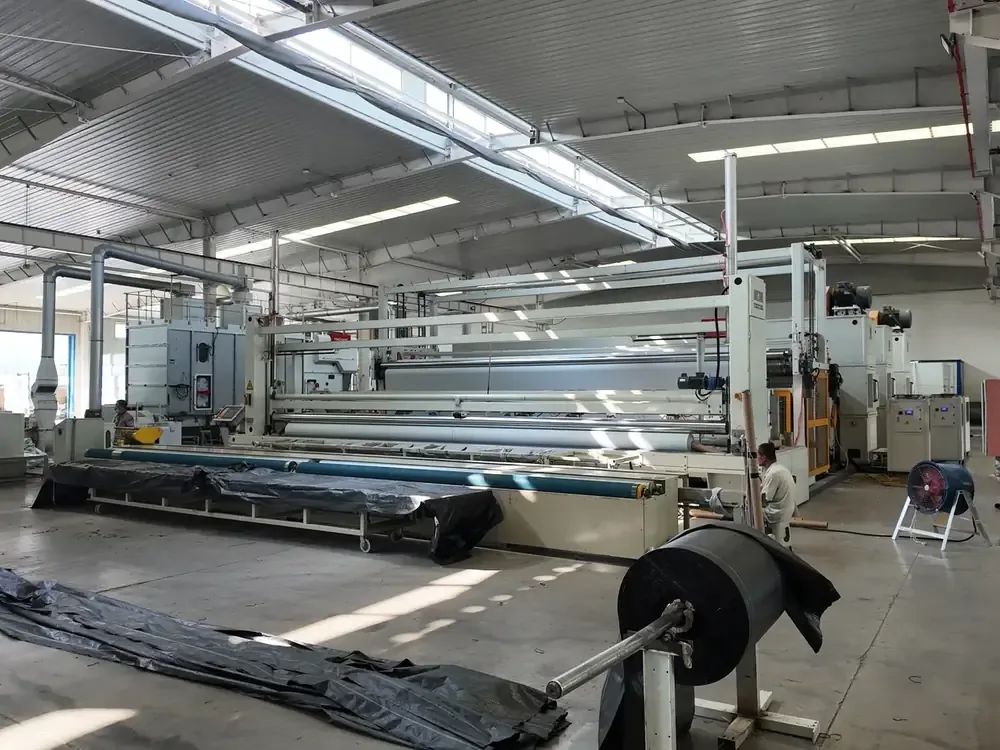
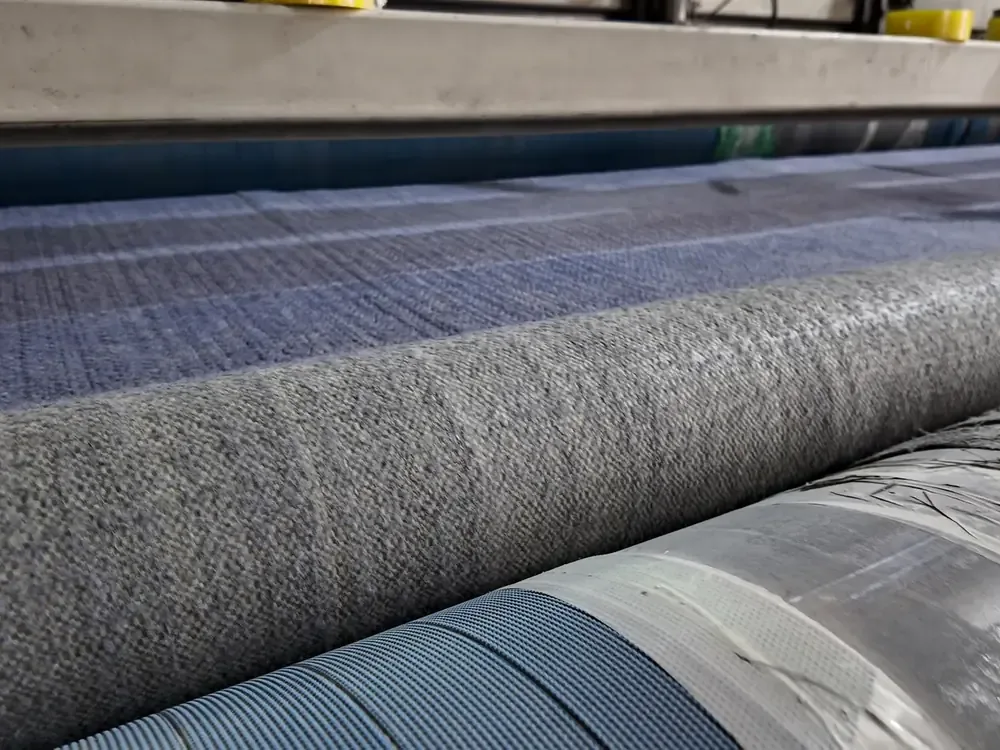
Fifteen lines, photographed on site
Blown film, coating, nonwoven, drainage net, GCL and cement blanket: equipment and finished goods photographed in our own plant.
15lines
29,410m² site
12,000m² solar
PROJECTS
Find a comparable working condition
Each case gives the application, location, year and material combination; open it for the background and installation points.
7applications
7projects
12scenarios
Application7 applications · 7 projects
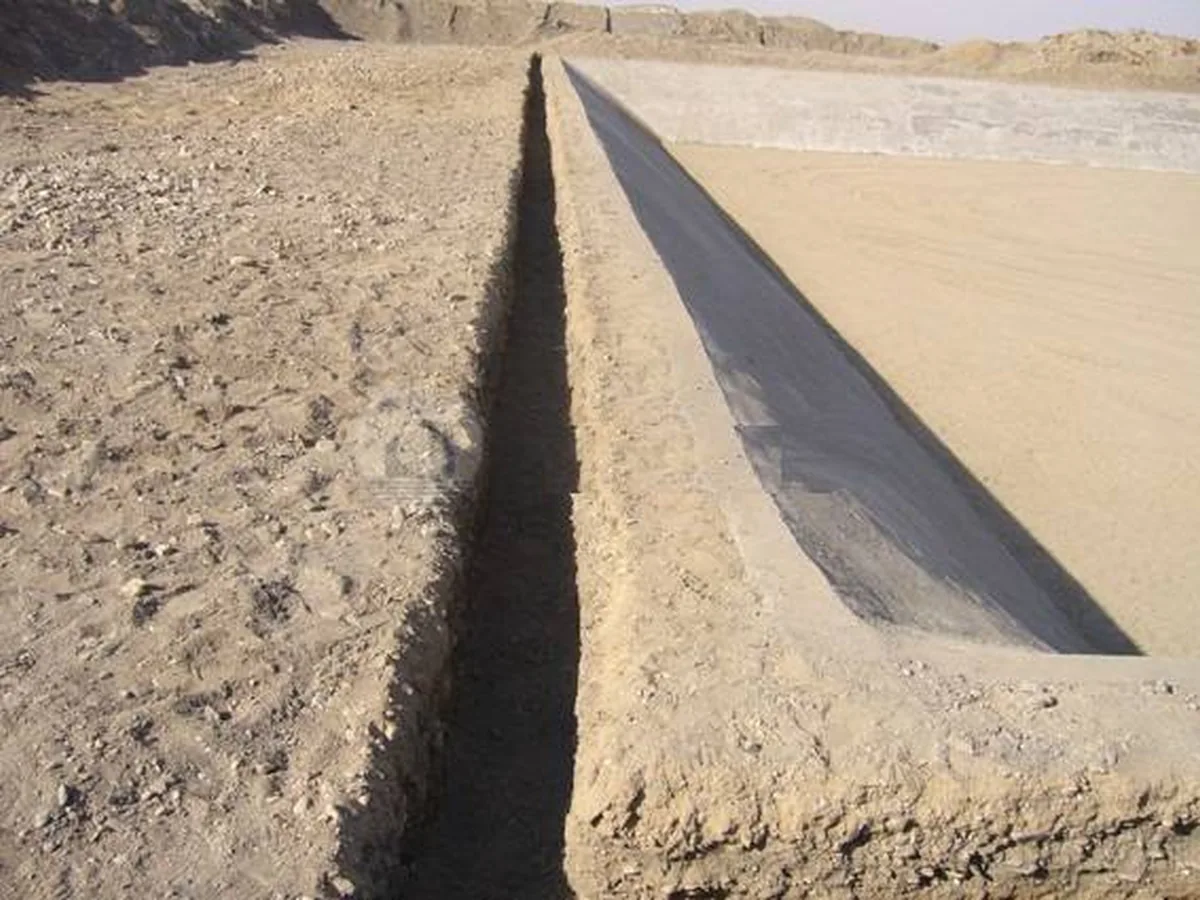 Water Conservancy
Hetao irrigation district canal lining
Canal lining in a large irrigation district: composite geomembrane, width cut to the lining block to reduce field seams.
View project →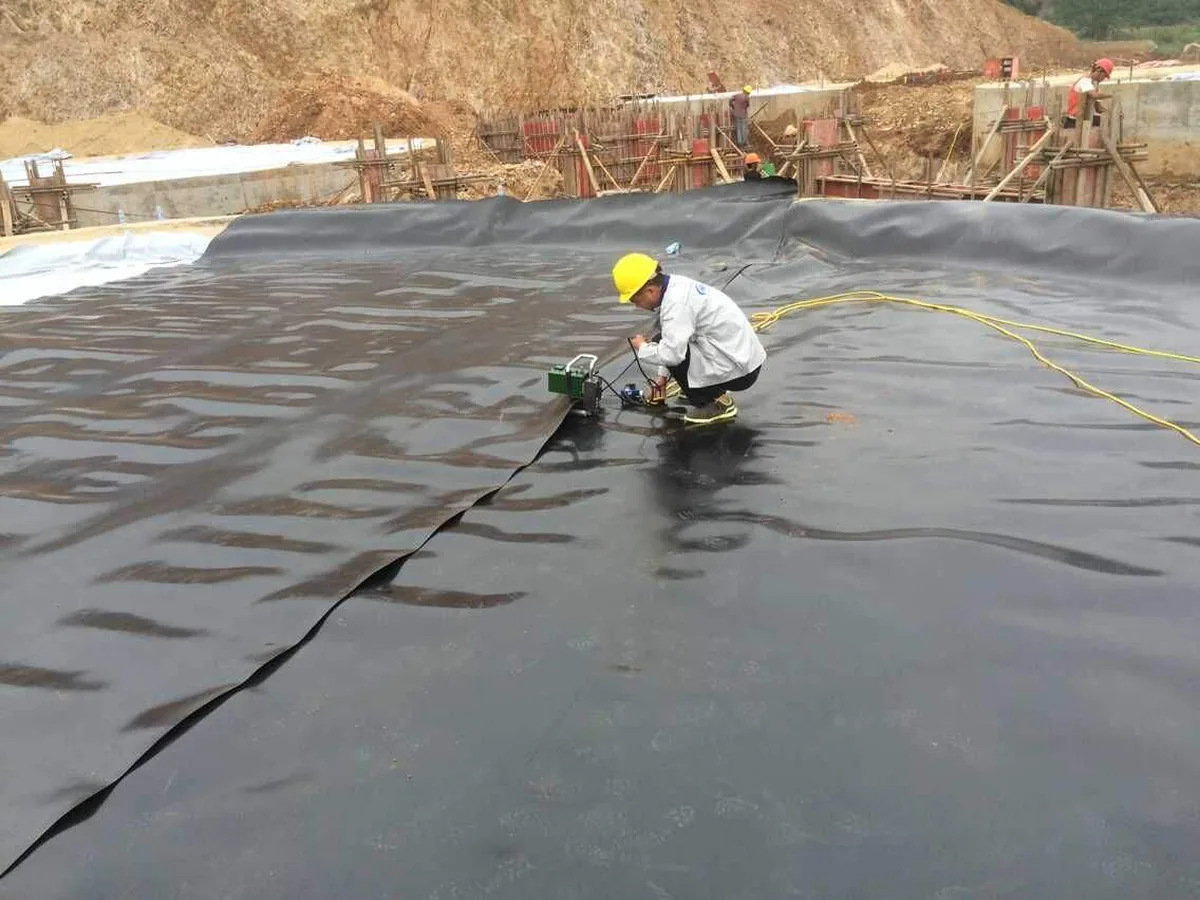 Environmental
Drilling site containment, Bohai oilfield area
Temporary, relocatable containment for oilfield drilling pads: oil-resistant HDPE membrane, custom roll lengths, recoverable after the pad moves.
View project →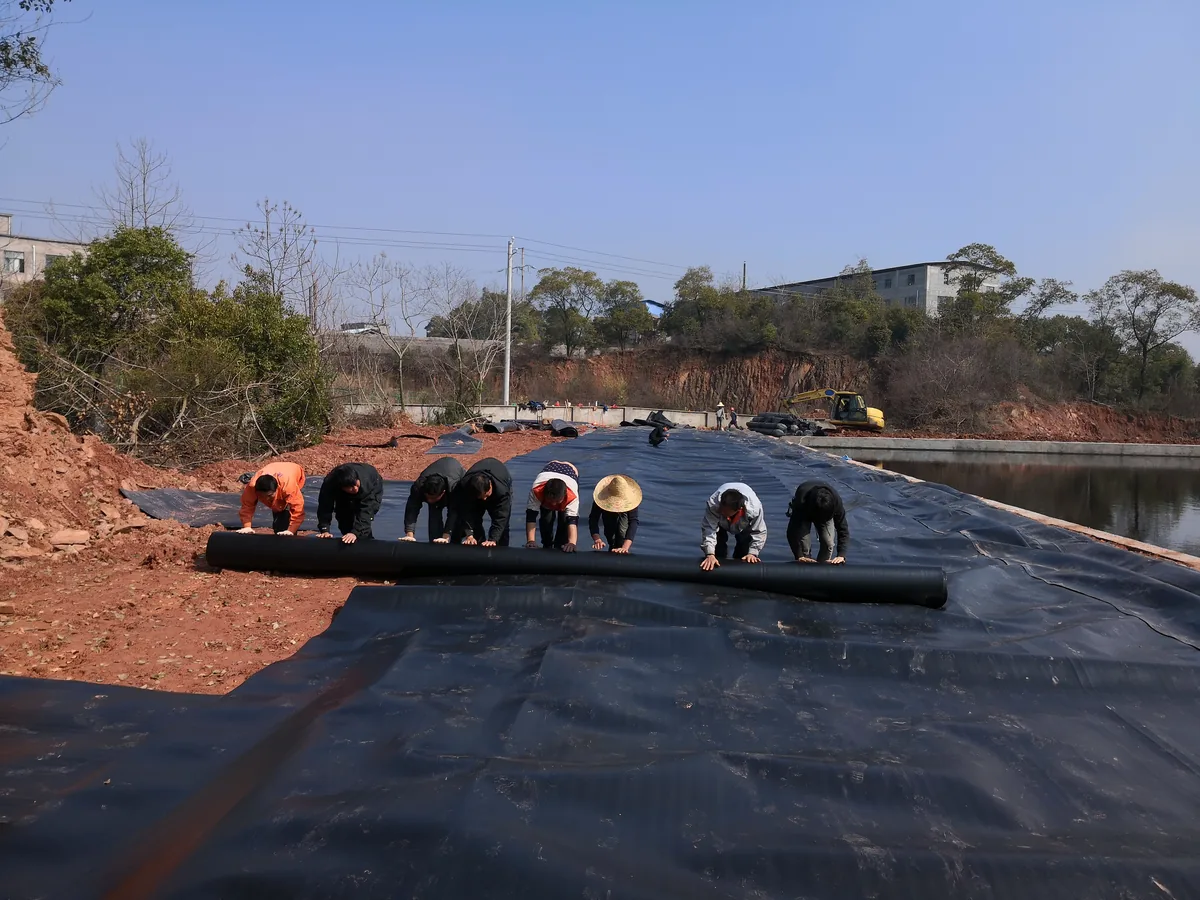 Environmental
Shengli oilfield surface works: framework supply
Multi-grade, small-batch framework supply for scattered containment points across oilfield surface facilities.
View project →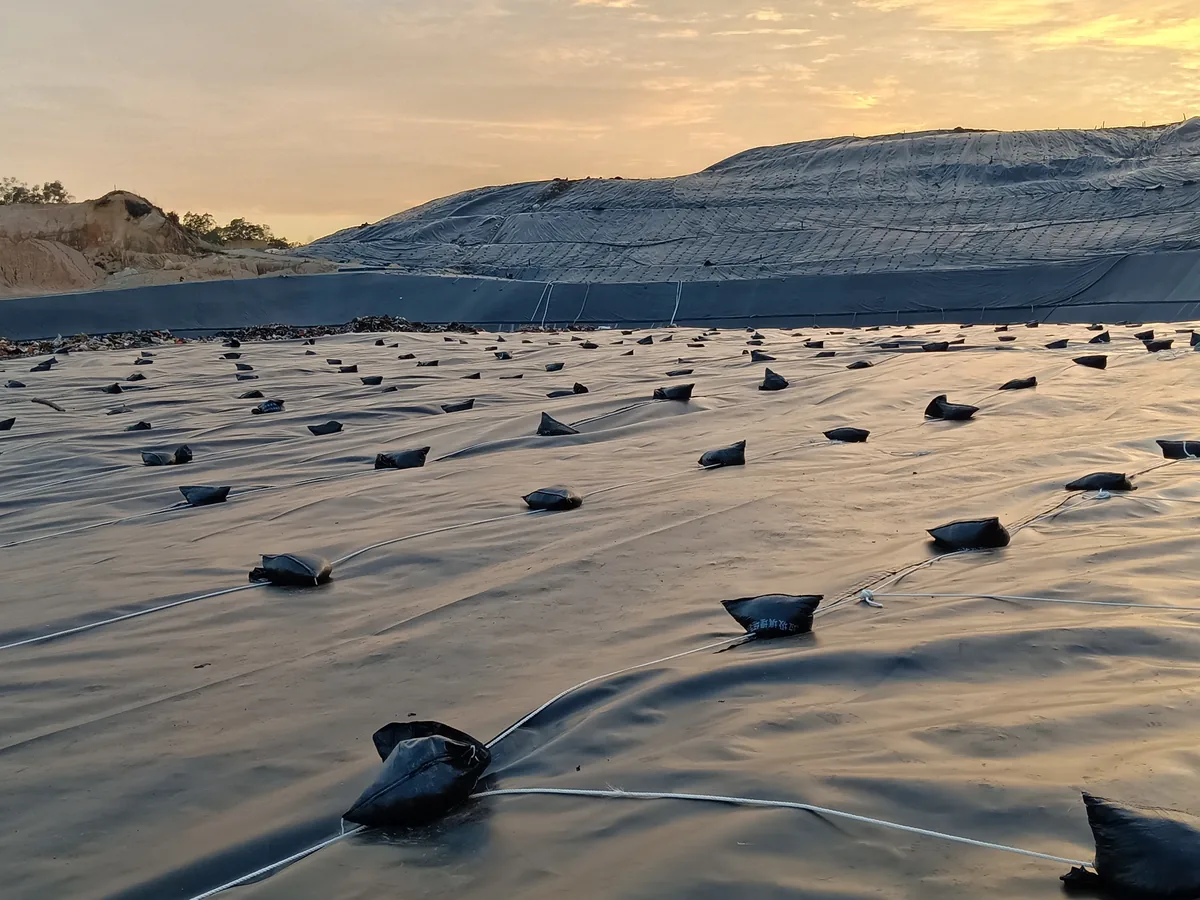 Environmental
Luotian county landfill containment
County-level landfill cell: 1.5 mm HDPE membrane on base and slopes, textured slope membrane, geotextile above and below.
View project →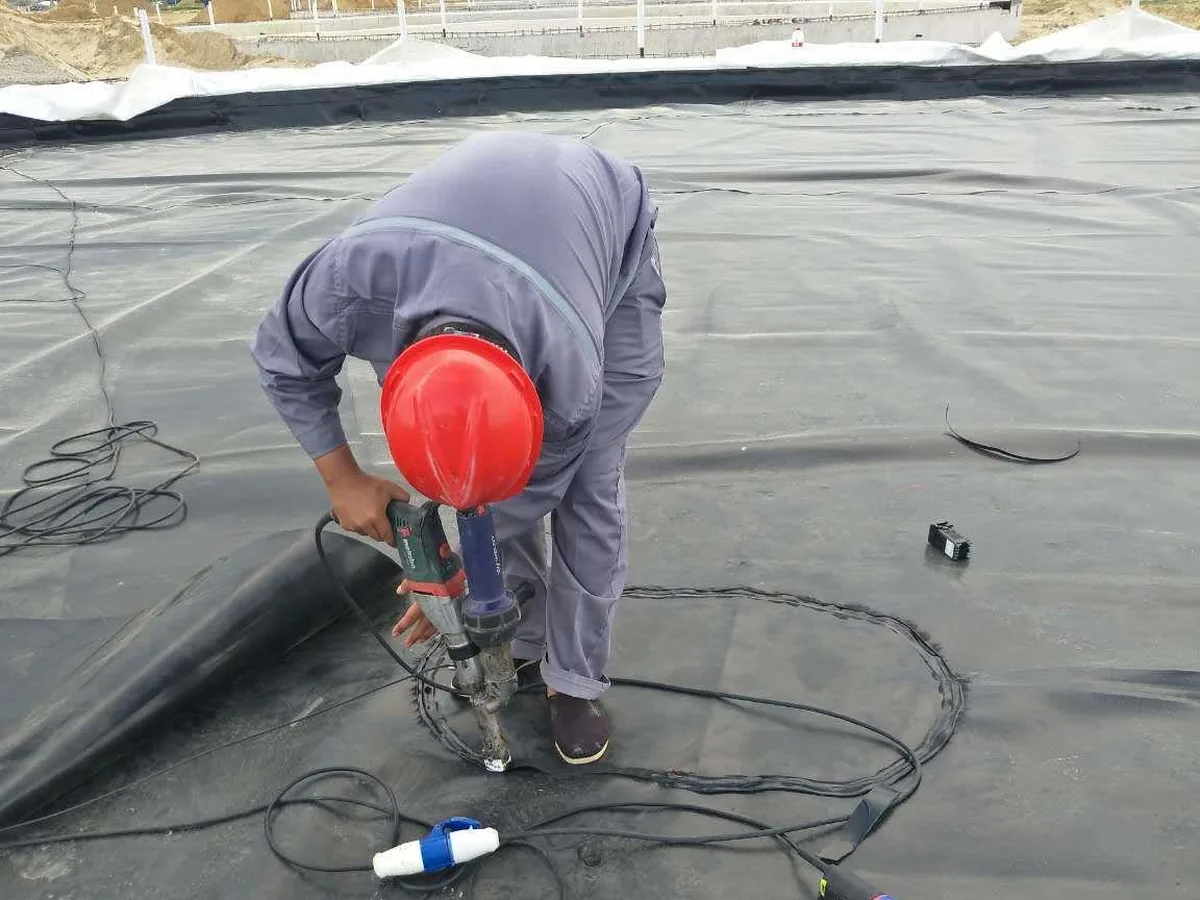 Mining & Slope
Anshan steelworks site containment and drainage
Industrial yard with complex subgrade and heavy loads: HDPE membrane as the barrier, geocomposite drainage net replacing thick gravel layers.
View project →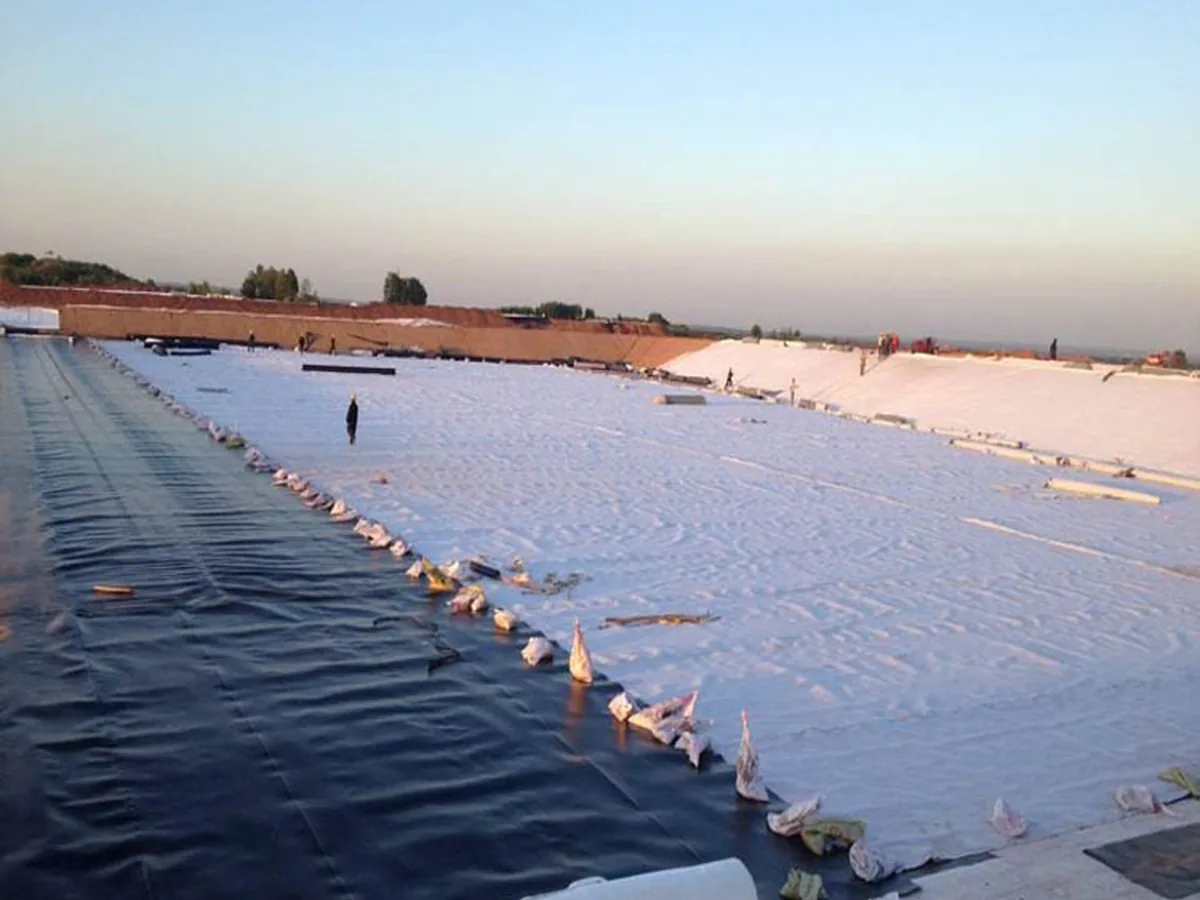 Mining & Slope
Shenyang aluminium-magnesium tailings containment
Tailings and stockpile containment supplied by zone: thicker membrane in the critical barrier zone, design thickness elsewhere.
View project →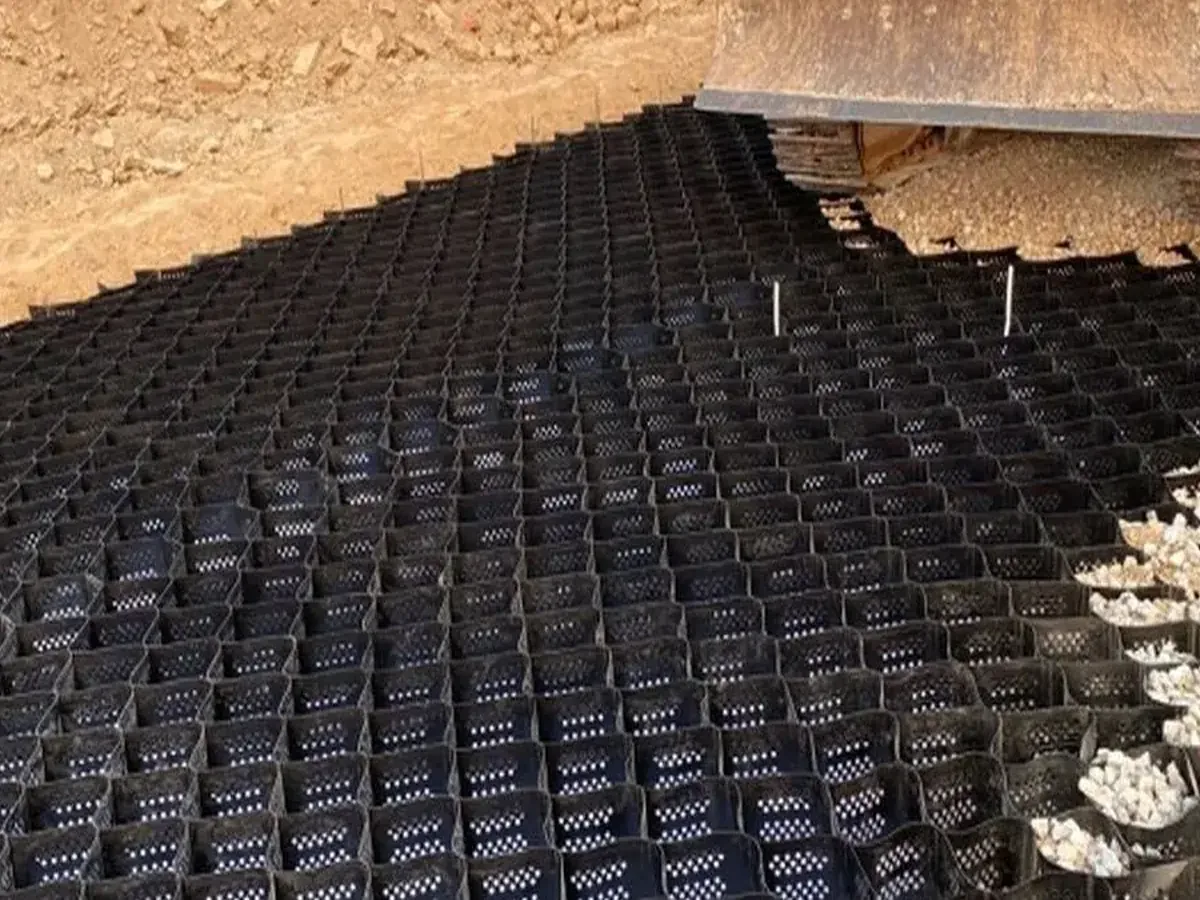 Transport
Manzhouli rail yard containment and drainage
Cold-temperate site with freeze–thaw cycling: membrane barrier plus drainage net, welded only in the non-frost period.
View project →PROJECTS
Find a comparable site by application
Transport, water, environmental, municipal, mining, marine and agriculture, with the material combination and acceptance points.
All projects →INSIGHTS & FAQ
Selection, installation and testing in practice
Technical notes organised by project question; standards, selection and procurement answers kept separate so the answer is easy to find.
18items
Standardselection
Installtesting
Thickness is not “the thicker the better”: how to use 0.5 / 1.0 / 1.5 / 2.0 mm
Thickness follows head, base, cover and design. Write the four conditions down so quotation and acceptance use the same basis.
Blown film line · inline thickness gauge- The name differs; acceptance still looks at thickness, standard and weld records.
- Low-cost regrind needs OIT and carbon-black figures, not price alone.
- Fix head and base conditions first, then 1.0 or 1.5 mm.
- Do not downgrade below the design thickness; treat any change as a variation.
- Trial-weld first, then pressure-test every dual-track seam.
2026-11-20Read the note →
01
Latest technical notesAll insights →
2026-11-18Welding temperature, speed and pressure: how to set them2026-11-17Seam testing: air pressure, vacuum or spark test2026-11-16Base preparation: stones, roots and moisture2026-11-15Anchor trench: size, backfill and slope fixing2026-11-14Composite geomembrane and GCL: which one to choose2026-11-13Truck loading and roll length: how to reduce freight2026-11-12Tender documents: test reports, certificates and project references2026-11-11Sampling, sealed samples and batch traceabilityStandards & selectionStandards →
StandardGB/T 17643-2025: what changed for buyers
NoteAcceptance file: seam records, repairs and as-built drawingsNoteGeomembrane and waterproofing membrane are the same materialNote1.0 mm versus 1.5 mm geomembrane
Procurement FAQAll →
FAQWhat is the difference between a geomembrane and a waterproofing membrane?FAQHow do I choose between 0.5 mm and 1.0 mm?FAQCan a sheet marked 1.0 mm measure 0.85 mm?FAQWhat does OIT tell me?PROCUREMENT FAQ
Eight questions before you place an order
Price, stock, lead time, samples, testing, custom sizes, installation and payment — in the order project buyers usually ask them.
Project purchasing & technical selection+86 156 8951 2579Mr. Zhang · 08:00–18:00 CSTSend conditions & drawings →
01How is a project price calculated?+
By structure, thickness or weight, standard, quantity, destination and document requirements. There is no meaningful flat price without the specification. Send the drawing, application, area and destination; we confirm the specification first, then issue a comparable quotation.
02Are common sizes in stock?+
Common thicknesses, weights and widths are held in stock and can be arranged quickly. Urgent project orders are prioritised in the schedule. Non-standard widths, long rolls or special structures are made to order; lead time follows the confirmed production slot.
03What is the minimum order?+
Standard products start from a full roll; samples and small trial batches can be discussed separately. Project deliveries can be split by area, roll length and site programme to reduce double handling and storage.
04What is the lead time?+
Stock orders are usually arranged within 1–3 working days. Custom specifications typically take 7–15 working days, depending on the line schedule and raw material batch. Long-distance deliveries follow full-truck or groupage transit times.
05Can you provide samples and test reports?+
Samples can be sent for common specifications. Each batch travels with an ex-works test report and certificate of conformity. Where a third-party report is required, we arrange CMA/CNAS testing by batch or by project.
06Can width, length and thickness be customised?+
Yes. Width, roll length and thickness can be made to the drawing and laying plan, keeping field seams in controlled positions. Base condition, welding method and transport limits are confirmed before production.
07Do you support installation and welding?+
We provide a technical briefing, welding parameter advice and guidance on common defects. Remote or on-site support can be arranged for key projects. Trial welds and peel/shear tests should be completed before full deployment.
08How do payment and contracts work?+
Contracts are signed with the company, with payment milestones, invoice type, warranty and acceptance terms agreed in the contract. First orders follow the standard terms; longer projects can be discussed based on qualifications and order volume.
PROJECT ENQUIRY
Send the site conditions,
Send the site conditions,
get the specification in writing
Landfill, tailings facility, reservoir, biogas digester, wastewater pond, tank farm or canal bank: tell us the application, area, head and base condition. Our technical team replies with a material combination, specification and installation notes to current standards.
- 01Application and area
- 02Thickness, standard and structure
- 03Datasheet, test report and quotation
Project purchasing & technical selection
+86 156 8951 2579
Mr. Zhang · 08:00–18:00 CST, business days
Send conditions and drawings How pricing works →- Common sizes in stock; urgent orders prioritised
- Batch test report and certificate with the goods
- Full-truck delivery to the site address