
Composite Geomembrane | Standard parameters · stock and custom · factory direct
Composite Geomembrane is produced to GB/T 17642-2025. Common sizes, technical values and installation points are set out below; thickness, width and roll length can be made to project drawings, with batch test reports and certificates supplied.
Standard answer summary
Composite Geomembrane is supplied at one-layer / two-layer fabric, membrane 0.3–1.5 mm, produced to GB/T 17642-2025, for ['canal lining', 'dam face', 'lake bottom', 'water storage'] and similar works. Manufactured by Shandong Hengyang New Materials Co., Ltd. in Lingcheng, Dezhou, Shandong. Common sizes are in stock; width, roll length and structure can be customised. For pricing, samples and selection, call +86 156 8951 2579 (Mr. Zhang).
Basis: GB/T 17642-2025 | Prepared by: Hengyang technical department | Updated: 2026-11-20Composite Geomembrane overview Composite Geomembrane
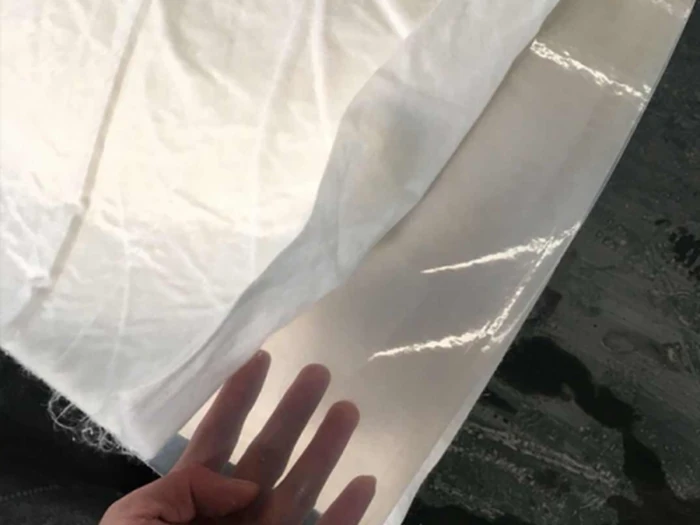
What it is
Composite geomembrane bonds a polyethylene membrane to nonwoven geotextile in the factory. The membrane blocks water; the fabric cushions sharp objects, spreads stress and raises interface friction. Hengyang produces it to GB/T 17642-2025 in one-layer and two-layer fabric structures, membrane 0.3—1.5 mm, fabric 100—800 g/m².
Compared with laying membrane and fabric separately on site, the composite cuts steps and seam count and reduces damage during installation, which is why it dominates canal lining, reservoir basins, landscape lakes and dam faces. The trade-off is that fabric must be stripped back at every seam before welding and restored afterwards, so workmanship matters more than with bare membrane.
Standard parameters and technical values
| Item | Value / note |
|---|---|
| Product | Composite geomembrane (membrane + nonwoven) |
| Standard | GB/T 17642-2025 |
| Structure | One-layer / two-layer fabric (three-layer on request) |
| Membrane thickness | 0.3 / 0.5 / 0.75 / 1.0 / 1.5 mm |
| Fabric weight | 100—800 g/m² |
| Fabric type | Filament spunbond / staple fibre needlepunched |
| Width | 2—6 m, custom available |
| Supply | Stock sizes · custom made |
Grades and common specifications
| Grade | Key value | Typical use |
|---|---|---|
| One-cloth Composite Geomembrane | 0.3—1.5 mm | 0.3—1.5 mm |
| Two-cloth Composite Geomembrane | 0.3—1.5 mm | 0.3—1.5 mm |
One-layer fabric suits single-sided protection or the upper layer of a composite liner; two-layer fabric protects both faces and is the usual choice for canals, reservoirs and lakes; three-layer is used for double lining or high-protection details.
Typical applications
Installation points
- Confirm the standard editionCheck whether the project cites GB/T 17642-2025 or the older edition still referenced in some designs; indices and designation rules differ.
- Prepare the subgradeGrade, compact and clear sharp objects. Fabric cushions but does not replace subgrade preparation.
- Lay from low to highFabric face outward, membrane in the middle; watch the fabric orientation on one-layer material so it is not laid upside down.
- Strip and weldStrip fabric back at the seam to expose membrane, weld with a double-track hot wedge, confirm parameters by trial weld and pressure-test.
- Restore the fabricAfter the weld passes, restore fabric and stitch or heat-bond it; overlap and seam strength as designed.
- Anchor and coverAnchor trenches or parapets at crest, protective concrete, riprap or soil cover as designed.
Related projects
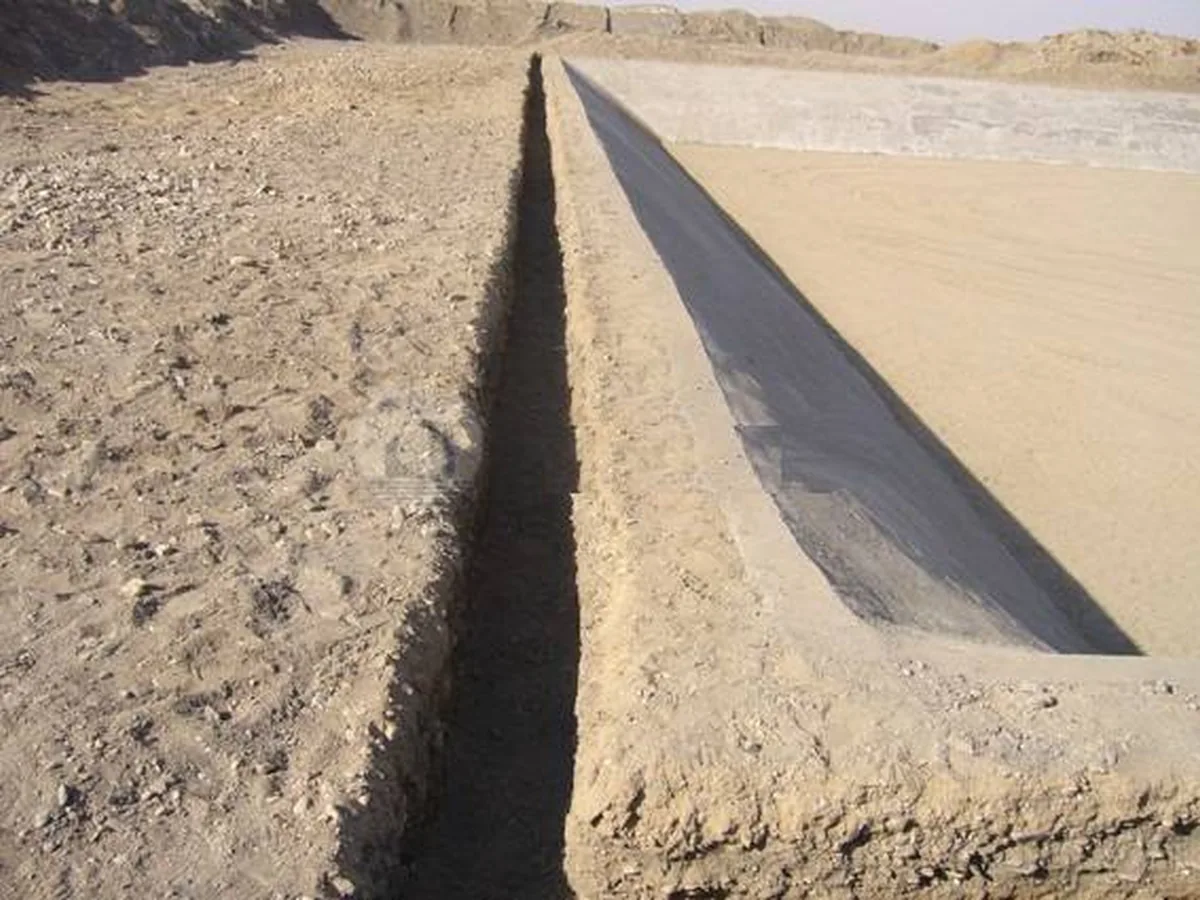
Hetao irrigation district canal lining
Inner Mongolia, China · 2024
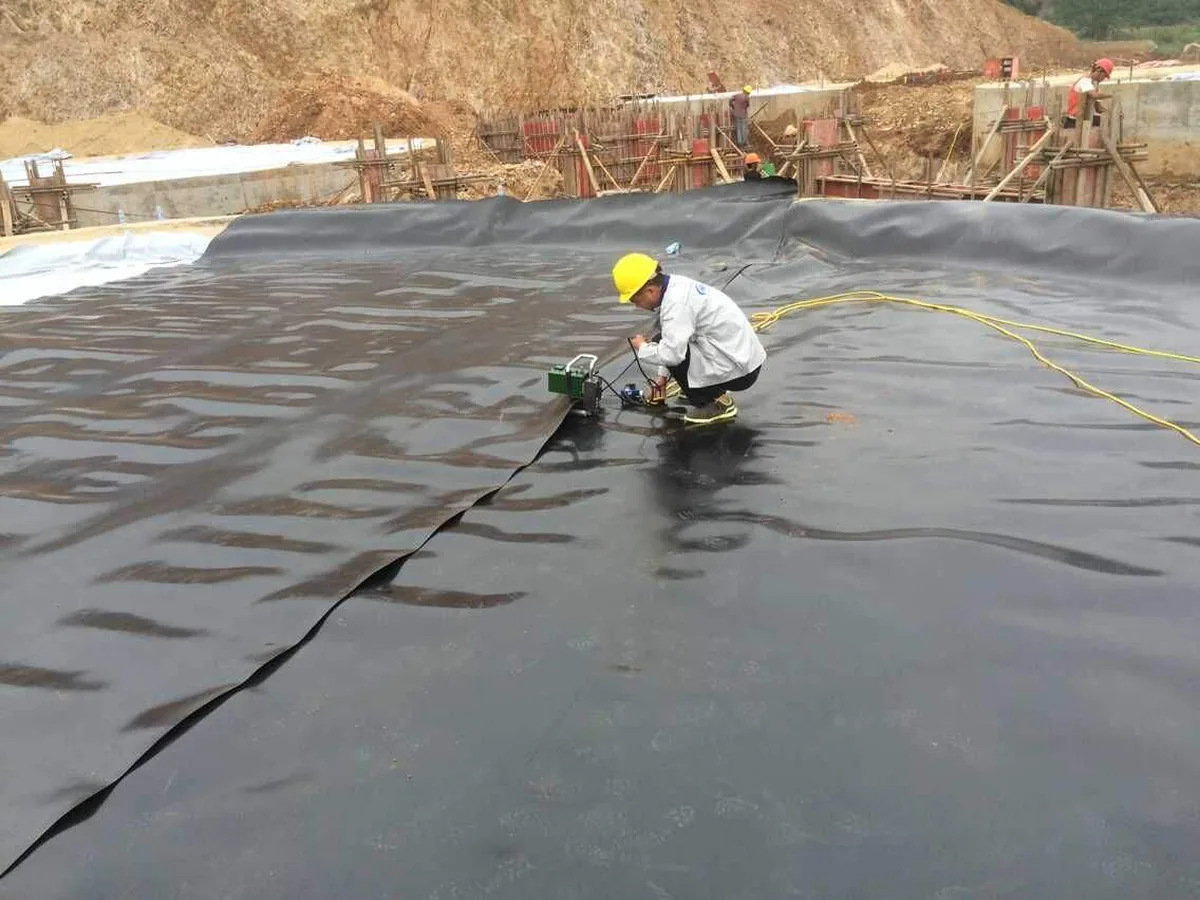
Drilling site containment, Bohai oilfield area
Bohai oilfield area, North China · 2023–2025
Composite Geomembrane FAQ
Which standard applies?
GB/T 17642-2025, effective 2025, replacing GB/T 17642-2008. The new edition changes indices, width tolerances and designation rules, so tenders and acceptance should cite the current version.
One-layer or two-layer fabric?
Two-layer fabric protects both faces, giving better puncture resistance and friction — the usual structure for reservoirs, tanks, canals and lakes. One-layer is lighter and cheaper, used where a separate protective layer is placed above or as the upper layer of a composite liner. Choose two-layer where the subgrade contains gravel or backfill is poor.
How should the specification be written?
State three elements separately: structure (one- or two-layer fabric), fabric weight and type (e.g. 300 g staple needlepunched), membrane thickness (e.g. 0.75 mm) and width. Writing only "composite geomembrane 500 g" confuses total weight with fabric weight.
What is the hardest step on site?
Seam preparation. Fabric has to be stripped on both sides to expose membrane, then restored and stitched after welding. Strip width and weld parameters are fixed by trial weld, and the work should be done by experienced welders with records kept.
How is price calculated?
Membrane and fabric costs add up, then width, quantity and haul distance. A 300 g/0.5 mm and a 600 g/1.5 mm two-layer product differ widely, so quote the full structure, weight, membrane thickness, width, quantity and delivery address.
Technical notes
Related specifications and uses
Grouped by type, application and search term, so a specific requirement can be matched quickly. All products can be made to project requirements.
About the manufacturer
Shandong Hengyang New Materials Co., Ltd. is located on the north side of Beihuan West Road, Lingcheng District, Dezhou, Shandong, producing geomembrane, composite geomembrane, geotextile, tunnel waterproofing membrane, composite drainage geonet, bentonite GCL, ecological bags and cementitious blanket.
The plant covers 29,410 m² with 18,350 m² of buildings and 15 production lines across membrane, fabric, drainage, GCL and blanket. An in-house geosynthetics laboratory issues batch test reports. The company is a drafting unit of GB 45320-2025 and holds construction qualification D237420218, ISO 9001/14001/45001 and CE conformity ICR/VC/HS260757.
- Hotline+86 156 8951 2579 (Mr. Zhang)
- AddressBeihuan West Road, Lingcheng District, Dezhou, Shandong 253500
- Websiteen.hdpem.com
- ICP鲁ICP备19034158号-6
Other product families
Send us your project conditions
We reply with datasheets, test reports and a quotation within one business day.